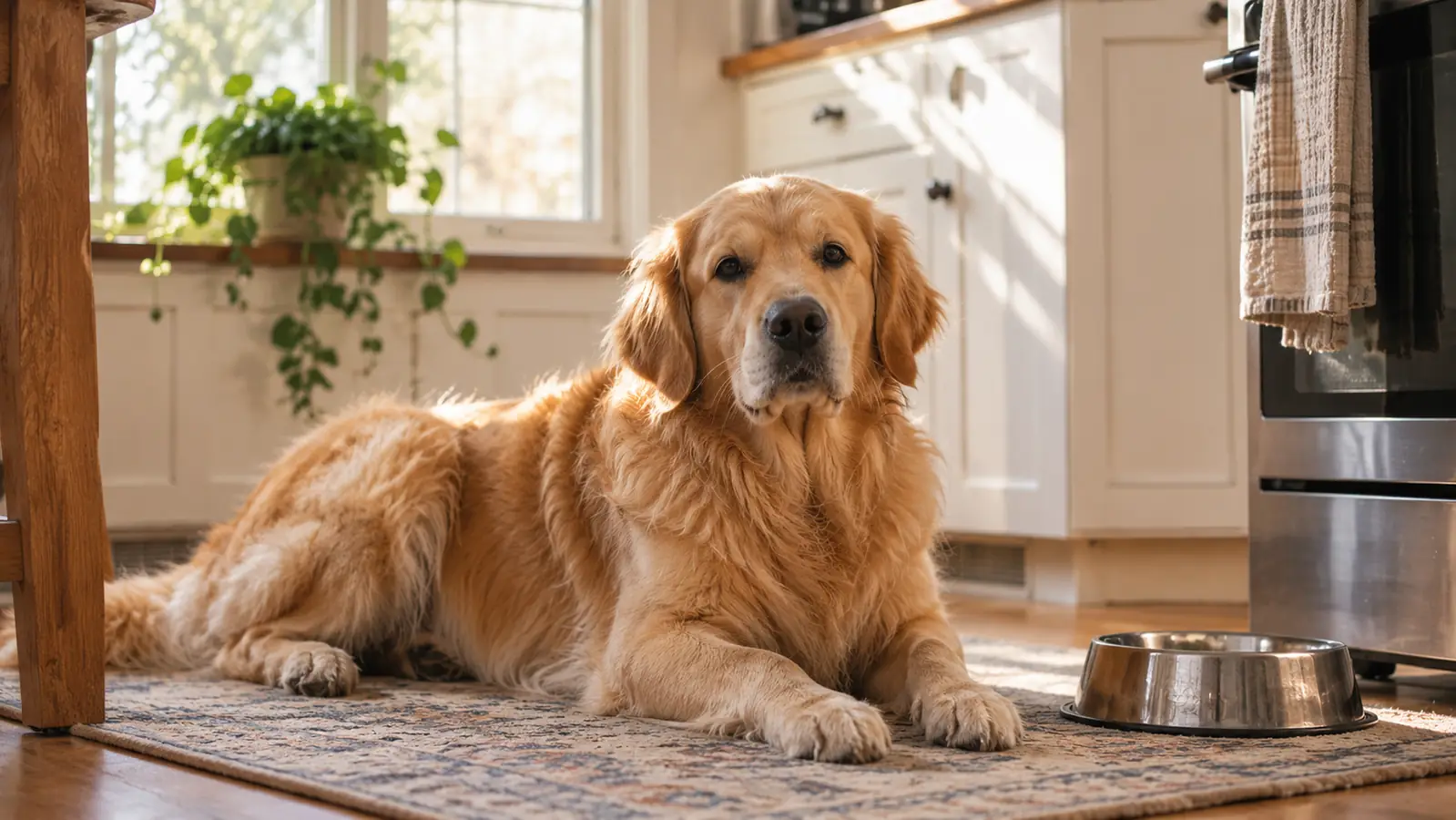
Tucker turned seven this spring. At his checkup the vet put a finger on his back molars, tilted his head toward the window, and said the word tartar the way a contractor says dry rot. Not an emergency. Not nothing, either. I asked what I could do at home besides the brushing fight, and she said dental treats, daily, sized right. Then she said the part I have thought about since: most people buy the wrong size and hand them out twice a week.
I have been giving Tucker Greenies Large Dental Treats every night after supper for about eleven months now. Not as a substitute for the brush or the cleaning, but as the part of the routine that actually happens on the nights when I am tired and the brush stays in the drawer. What follows is the five-step version I wish somebody had handed me at the start, including the two steps I got wrong for the first month.
The size that actually fits him: Greenies Large, built for dogs 50 to 100 pounds
Tucker sits at 68 pounds, right in the middle of that range. One treat after supper, every night, is the entire habit. The 24 count bag and today's price are on the listing.
Amazon Check Today's Price on Amazon →Step 1: Match the Treat to Your Dog's Weight, Not to the Bag You Grab in a Hurry
Greenies makes this treat in more than one size, and the size is not a suggestion. The Large is designed for dogs from 50 to 100 pounds. Tucker runs about 68, which puts him comfortably in the middle of that window, and that is the whole reason I buy this bag instead of the one below it. The bag says it plainly. It is easy to ignore when you are standing in an aisle with one in each hand and the dog is pulling toward the door.
A dog outside that range is a different purchase entirely. A 35 pound dog should not be working through a treat built for a 100 pound one, and a 110 pound dog will be finished with a Large before it has done much of anything. I have grabbed the wrong bag in a hurry before and it took me a week to notice the treats were going down in two bites instead of taking real work.
The size also decides how long your dog spends on the thing, and that matters more than people give it credit for. A treat that disappears in three bites is a snack with a dental claim printed on it. A treat that takes a couple of minutes of actual chewing is closer to what you thought you were buying. For Tucker the Large takes long enough that I can rinse the bowl and wipe the counter before he is done, which is about the right measure for us. I timed it once out of pure curiosity: just over three minutes on the first night of a fresh bag, and closer to two by the end of the bag once he has his technique down. Two or three minutes of real chewing is a better use of a dessert slot than ten seconds of crunching.
Step 2: Put It on a Clock Instead of Giving It When You Remember
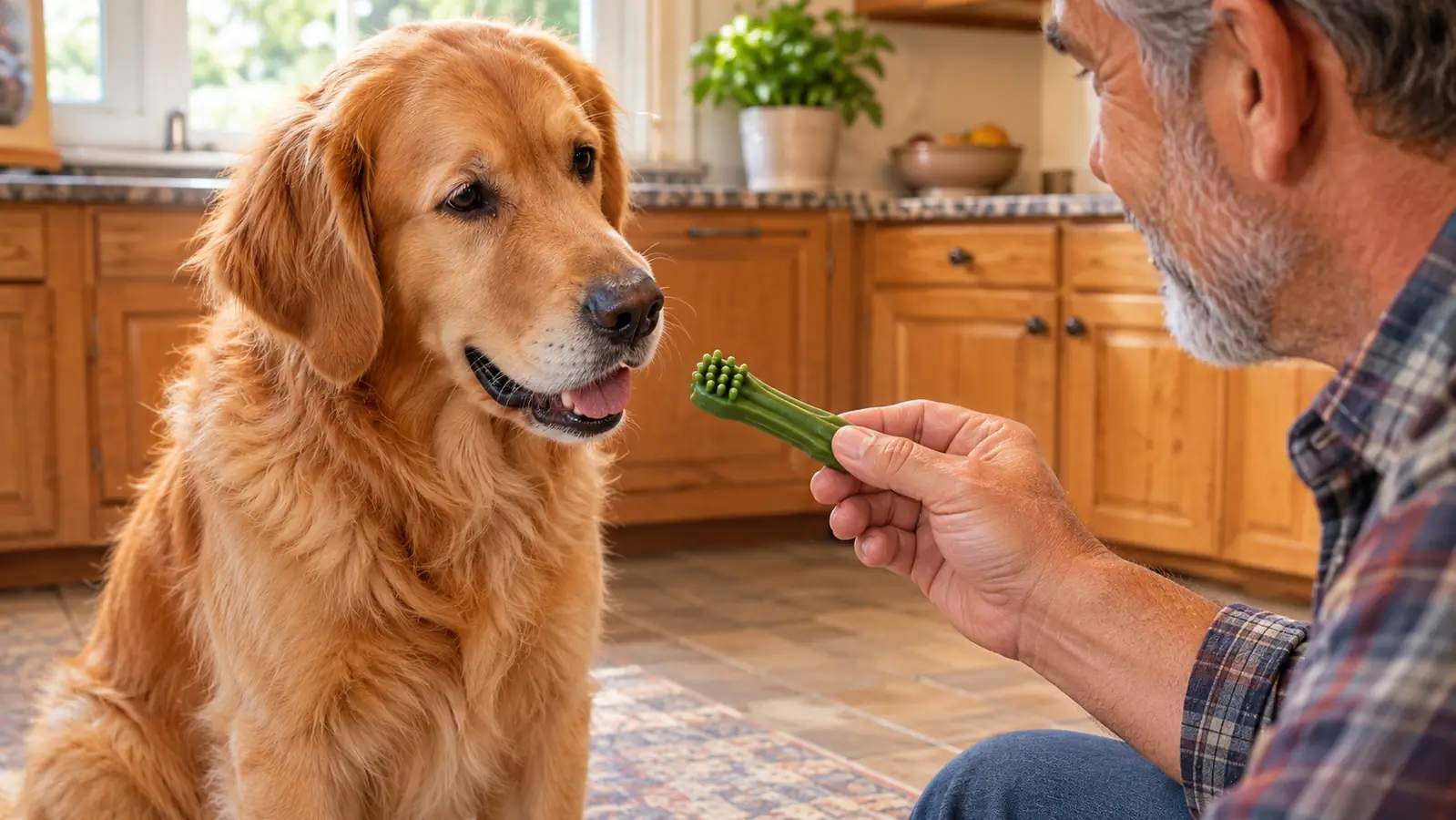
Tucker gets his after supper. Same time, same order, every night. The bag lives in the cabinet above the dog food bin, which means I see it while I am scooping kibble and I do not have to hold it in my head. That single choice, putting the bag where the feeding happens instead of in a drawer across the kitchen, is the reason the habit stuck past week two. Before that I had it in the pantry behind a bag of flour, and I would remember somewhere around nine o'clock, which meant the treat landed right before bed and the water bowl got a workout at two in the morning. Moving the bag about four feet fixed all of that.
The reason for a fixed time is not discipline for its own sake. Dental treats work on accumulation, not on the grand gesture. One a day for eleven months does more for a dog's back molars than five on a Saturday when you feel guilty about the week. The vet described the tartar on Tucker's back teeth as the slow kind, which meant my counter move had to be slow and boring too. A nightly habit is boring. That is the point of it.
Eleven months in, the honest report. His breath is better and it stays better, which is the change Darlene noticed before I did. At the last visit the vet said the buildup on the back teeth was not progressing the way it had been. That is not a cure and I am not going to dress it up as one. It is movement in the right direction from a habit that costs me a few seconds a night, and I will take that trade every time.
Step 3: Slot It Into the Chew Rotation Instead of Stacking Chews on Top of Each Other
This is the step I got wrong first. I already had a rotation going. Bully sticks a couple of nights a week, a yak cheese chew that lasts him several days at twenty or thirty minutes a session, and an elk antler that comes out when I am working in the garage or out in the yard. Adding a dental treat on top of all of that is a lot of chewing in one evening and a lot of calories nobody is counting.
So the dental treat goes on the nights that are otherwise quiet. On a bully stick night, he gets the stick and no dental treat. On a Greenies night, it is one treat and nothing else. The antler does not really count the same way because it is not food, it is something to do while I am out of the room. Separating the food chews from each other was the change that ended the loose stools he was having that first month.
If you are running more than one kind of chew, write it down for a week. I did, on the back of an envelope on the counter, one tally per item, and I was handing out more than I would have guessed. By Wednesday the pattern was plain: a bully stick on Monday, a yak cheese session on Tuesday, then a dental treat piled on top of both because I had not been counting them as the same category. That is three chews in three days for a dog who does better on one. Seven days of tally marks will tell you more than a month of trying to remember.
Step 4: Read the Ingredient Line Instead of the Front of the Bag
Tucker has a sensitive stomach. Not a diagnosis, just a fact about him that I learned the expensive way with cheaper chews. So the back of the bag gets read before anything goes in the cart, and the front of the bag, with the picture and the big letters, does not tell me much of anything.
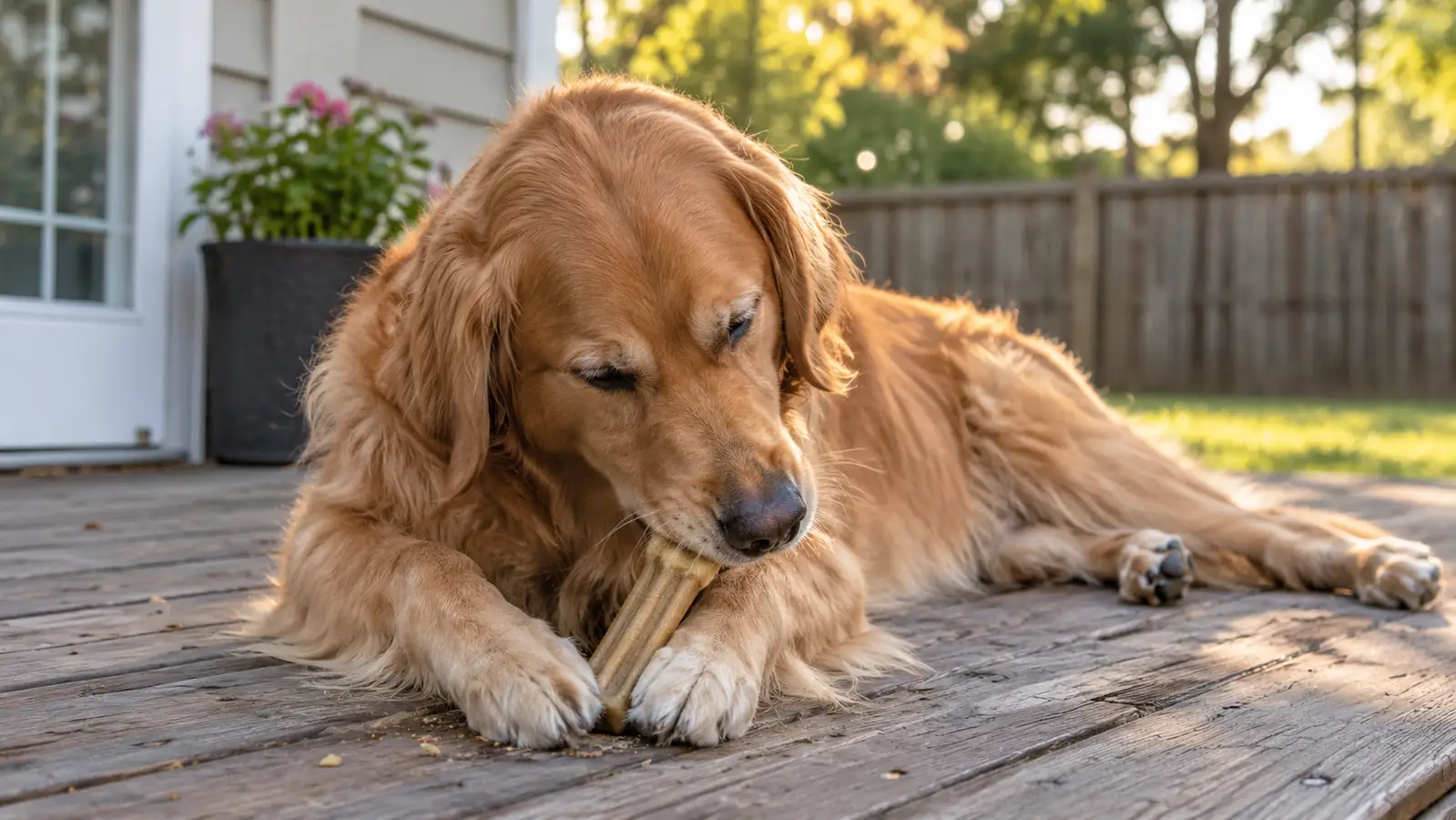
The Greenies ingredient line starts with wheat flour, then gelatin, glycerin, and natural poultry flavor. The bag lists no artificial flavors and it is rawhide-free, which matters to me because rawhide is the thing I quit buying years ago after one too many slimy surprises on the rug. The treat is a stick form, so there is no knot or hide to come apart in the throat, and that is most of why I am comfortable leaving the room for two minutes while he works on it. I have stood in an aisle and read the backs of four bags in a row before. What I want to see is a short list of things I can pronounce and no mention of rawhide anywhere on the packaging.
The wheat flour being first is worth saying plainly, because it is the detail that decides this purchase for some dogs. If your dog has a wheat problem, this is not the treat for him, and there is no way around that. Tucker has been on it eleven months with no loose stools and no itching, and that is the only test I can actually run. That is one dog, not a study, and I am not going to pretend otherwise.
Step 5: Keep Brushing and Keep the Cleaning Appointment
A dental treat is not a toothbrush. The bag does not claim it is, the vet did not say it was, and I would be doing you a disservice to let you walk away thinking otherwise. What the label does claim is narrower and more useful: clinically proven to help clean teeth and fight tartar, veterinarian-recommended, designed for dogs in that 50 to 100 pound range. Narrow claims are the ones worth trusting.
So the brush still comes out, badly and not often enough, and the vet still does the cleaning when it is due. The treat is the thing that happens on the nights I am not going to wrestle a 68 pound dog in a bathroom at nine o'clock. That is the honest split, and once I stopped expecting the treat to do the brush's job, I stopped resenting both of them.
Check the teeth yourself once a week. Head in your lap, thumb on the lip, look at the big back teeth where they meet the gum. You are looking for brown buildup along that line and for gums that are red where they ought to be pink. If you find it, that is a question for the vet, not a reason to buy a bigger bag of treats.
Eleven months of one treat after supper, and the buildup on his back teeth stopped progressing the way it had been. Small thing. Happened every single night.
What Else Helps
A few things around the edges have made a difference for us. Fresh water in the bowl, changed daily, because a dog that drinks is a dog with a wetter mouth and I will take every bit of help I can get. There is a second bowl out by the back door that gets dumped and refilled every morning I am out there with him, which is most mornings. A chew that takes real time, which is why the bully sticks and the yak cheese stay in the rotation instead of getting replaced by something quicker. And a quick look at the gums every Sunday while we are both on the floor and he is in the mood to be handled.
The other thing that helped was ending the free-for-all. For years I kept a jar of something on the counter and Tucker got one whenever I walked past, which is a lot of treats and not much of a plan. Now the counter jar holds the soft training treats and the dental treat comes out of the cabinet at a set time after supper. Same dog, fewer calories, better teeth, and he does not seem to have noticed the difference in his quality of life.
If your dog is a hard chewer like mine, keep an eye on how fast he goes through anything. When a chew starts going down in under a minute, it has stopped being a chew. That is when I take it away, and it is the same instinct that tells me the Large is the right size for a 68 pound dog and the next size down is not.
One treat after supper, every night, sized for a dog between 50 and 100 pounds
The 24 count bag runs a little over three weeks at one a day. Tucker is eleven months in and still gets his at the same time every night. Today's price is on the listing.
Amazon Check Today's Price on Amazon →