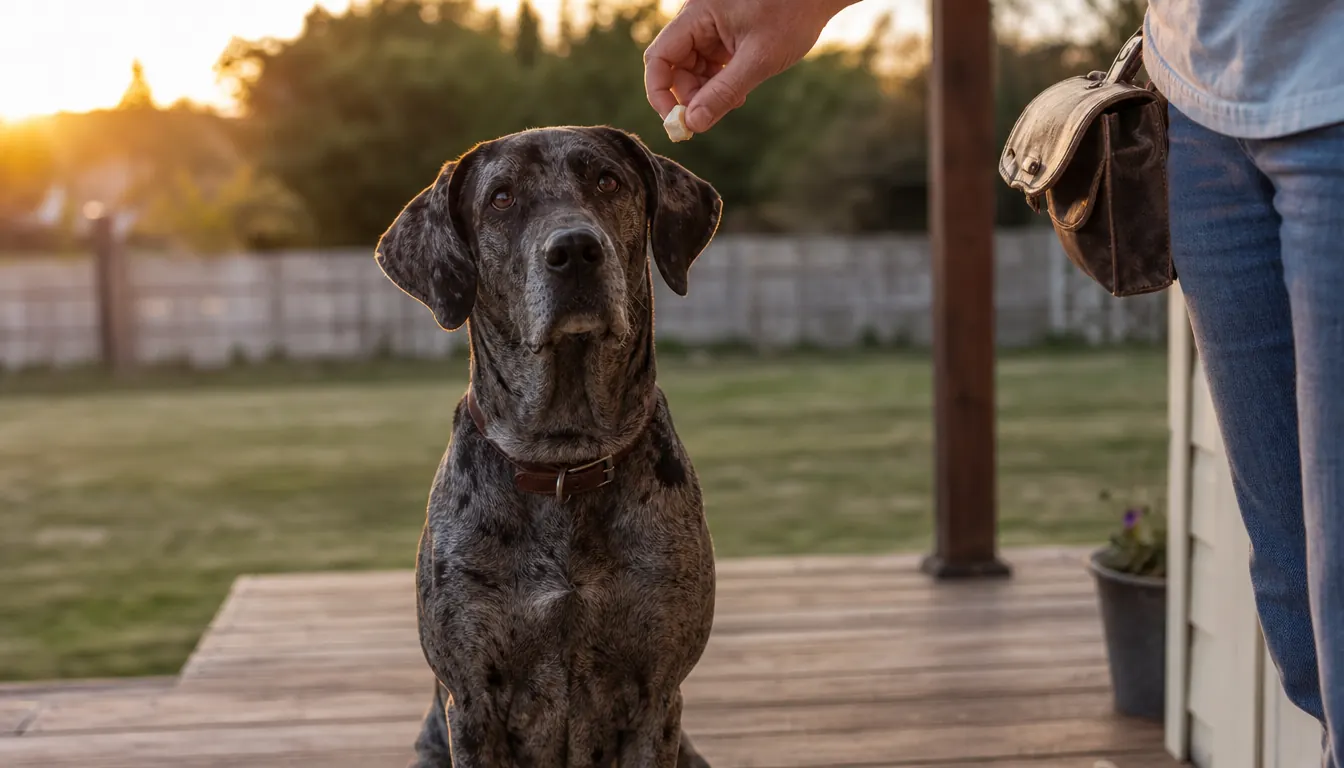
Tucker will sit for a biscuit. He will not come back to me across a field full of deer scent for a biscuit. That gap, between the dog who sits and the dog who comes back, is the whole reason I went looking for a soft training treat about six months ago, and it is why a bag of Wellness Rewarding Life Soft Training Treats has stayed in my pantry ever since. If your dog is anything like mine, that gap is where most of your money and all of your patience go.
I am not a trainer. I am 54, retired out of HVAC work, and I live outside Murfreesboro, Tennessee, with my wife Darlene and a 68 pound yellow Lab mix who chews like it is his job and has a stomach that argues with about half of what he swallows. When a treat works, I buy it again. When it does not, I say so, and I say it plainly. So here is what six months in a leather belt pouch actually looked like, including the parts of these Wellness treats that do not flatter them.
The Quick Verdict
The bag I keep buying. Soft enough to break with a thumbnail inside a pocket, clean enough for a dog with a touchy gut, and small enough to reward fast. Not a chew, not a meal, and the bag empties quicker than you expect.
Amazon Check Today's Price →Kept in my belt pouch, not on the pantry shelf
Beef and turkey, grain free, no artificial colors, no corn, wheat or soy. This is the reward I hand out mid-walk when Tucker actually turns around and comes back. Check the current bag size and price on Amazon.
Amazon Check Today's Price on Amazon →How I've Used It
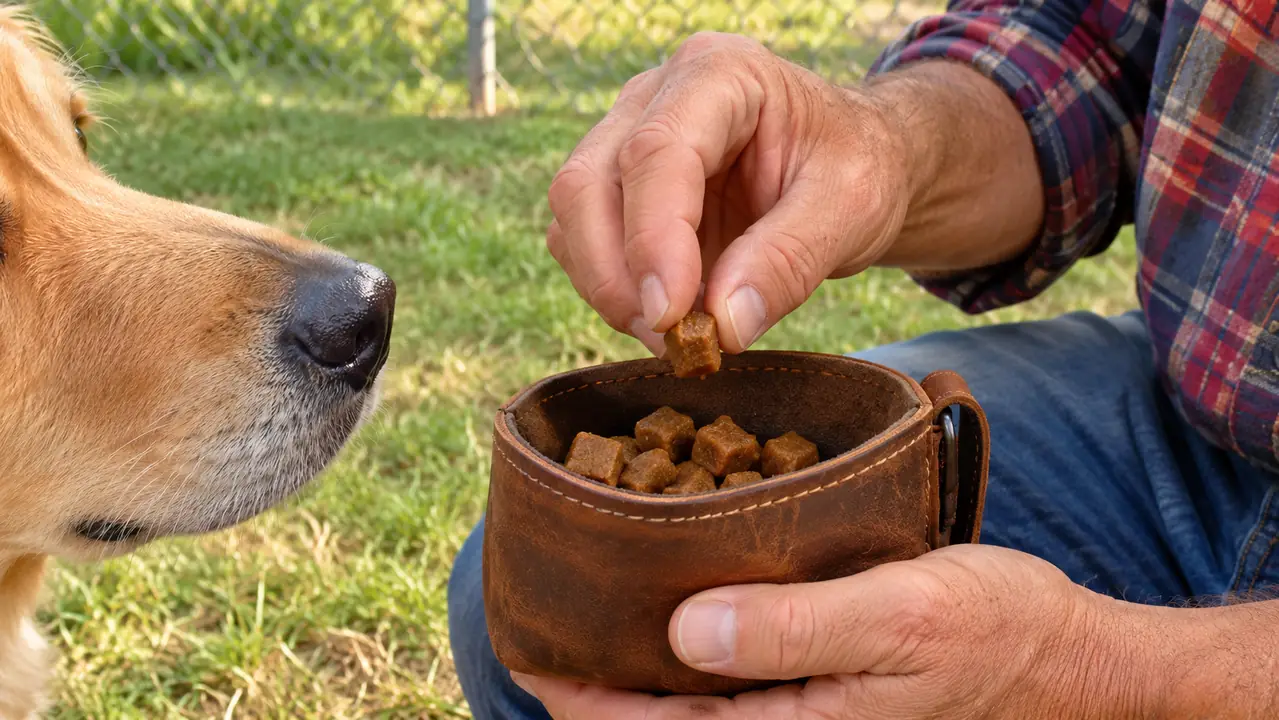
The bag stays in the pantry. The pouch stays on my belt by the back door. Every morning I fill that pouch about a third of the way, and whatever is left at sundown goes back in the bag, because a soft treat that has ridden around a pouch all day in Tennessee humidity is not something I want to hand a dog on day two. That is the whole system. Six months in, it has not changed, which is more than I can say for most of the gear I buy.
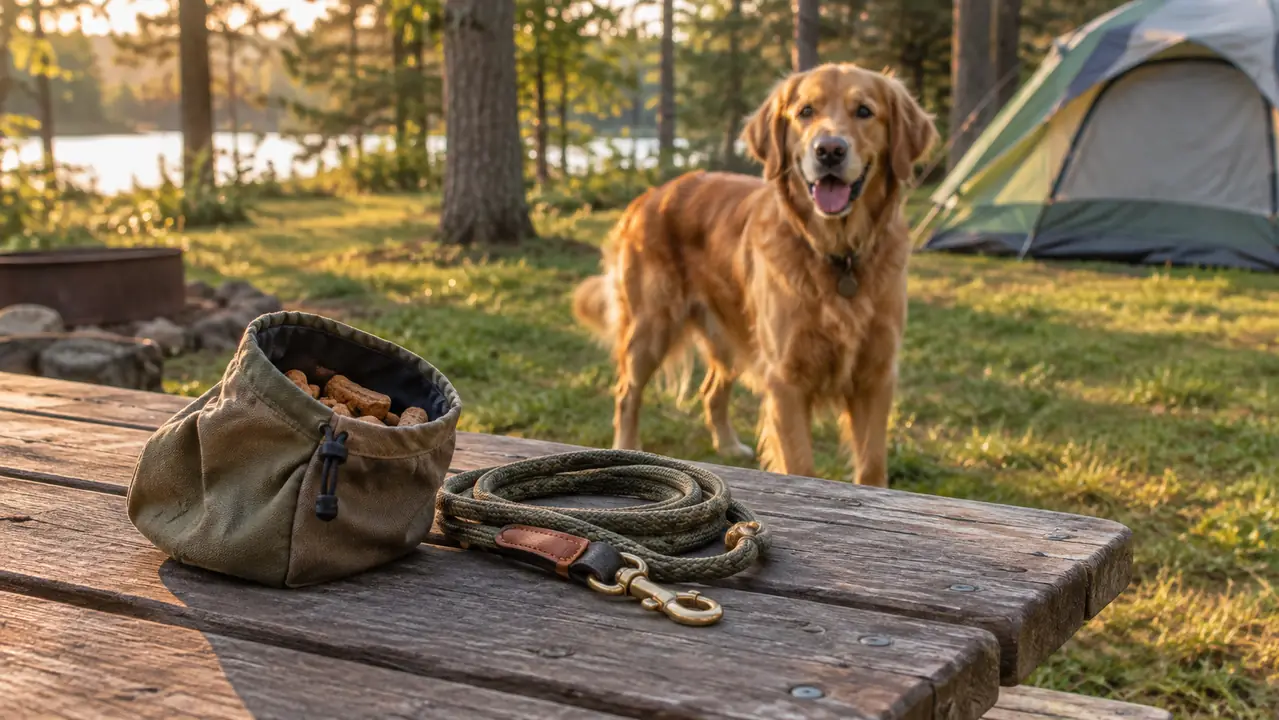
Where they get used matters. In the backyard they are for recall drills, the boring repetitions where I say his name, he looks up, and I pay him for turning around. On our road walks they are for loose leash practice, one small piece every time he gives me slack instead of dragging me toward a mailbox. At the state park a few weekends a year they are the thing in my pocket when he comes back off a scent trail instead of blowing through the campground loop. Three jobs, one treat.
I break them in half, sometimes in quarters for the easy stuff. Soft treats let you do that. A biscuit you either hand over whole or you crumble into pocket lint. Being able to stretch one piece into three rewards is the difference between a bag that lasts a month and a bag that lasts a week, at least in my house.
I tried the other direction first, and that is worth telling you. For about two months before this bag I was carrying freeze dried liver cubes in a little plastic tub. Tucker loved them and they turned to brown dust in the bottom of the pouch, so every third reward was a pinch of powder instead of a piece of anything. Before that I used plain biscuits, and the problem there was time. He would take one, carry it off to the rug, and crunch through it while I stood in the grass waiting to run the next repetition. Neither one was wrong exactly. Neither one let me work fast enough to teach a dog anything.
What Is Actually in the Bag
I read labels. I have to. Tucker's stomach has opinions, and I got tired of cleaning the rug at eleven at night. The listing for these says turkey and beef, grain free, no poultry by products, no wheat or wheat gluten, no corn, no soy, and no artificial colors. It also lists DHA from salmon oil and Omega-3 from flaxseed. The label says made in the USA from globally sourced ingredients, which is honest language and worth knowing, because it means the manufacturing is domestic and the raw material is not.
I read that ingredient list the way I used to read a service manual, which is to say slowly and out loud with my glasses pushed up on my head. Corn and wheat gluten are the two I look for first, because those are the ones that have given us trouble, and neither one appears on this bag. The flaxseed and the salmon oil sit further down the list, and they are not the reason I buy it. They are a nice thing to see on something I hand out forty times in a week instead of the usual string of words I cannot pronounce.
For a dog with a sensitive gut, what is missing matters more than what is added. No wheat gluten and no corn is the part I care about most, since those are the two I have learned to steer around with him. No artificial colors is a low bar, but a lot of training treats clear an even lower one. And a grain free soft treat is not automatically gentle on every dog. It just means one fewer thing to blame.
What is not in the bag is worth saying too. These are not a dental chew, they are not a meal, and they will not replace a bully stick on a rainy afternoon when the dog needs to work at something for an hour. They are a reward. Small, quick, swallowed in a second, so we can get back to the business of practicing. People get disappointed when they expect a training treat to do a chew's job.
The bag is listed at 6.08 ounces and about 2 by 6.25 by 8 inches, which is a small bag. I bring that up because people order one, find out how fast a working dog goes through it, and then act surprised. If you are in the middle of teaching something, buy two. I keep mine in the pantry and refill the pouch from it every morning, and I have not once been caught short.
What Six Months of Training Looked Like
The first two weeks were not about the treat at all. Tucker is seven, he has been paid for sitting since he was a pup, and a new bag did not change that. What changed was speed. A soft piece goes down in one motion, so I could pay him, reset, and ask again inside of three seconds. With a biscuit he is crunching for ten, and by the time he looks back at me the moment is gone. That is the whole argument for soft treats, and it held up.
By the second month his recall in the fenced backyard was close to automatic. Not because of the brand on the bag, because of the number of repetitions, and the number of repetitions went up because the payment got faster. That is the honest version. Any soft treat small enough to swallow quickly would probably have done the same thing. What Wellness gave me was a soft treat his stomach tolerated, so I did not have to stop the drills for two days every time we pushed hard.
There was a Tuesday in April that I still think about. Wet grass, about six in the evening, and instead of drilling him I decided to test him. I stood at one end of the yard and called once. He came at a dead run from the far fence line, ears back, and I paid him with a whole piece instead of a half. Twelve repetitions that session, all of them clean, and I quit while we were both winning instead of pushing to twenty and losing him halfway there. That is the rhythm these treats let me keep.
At the campground, in strange grass with a dozen new smells, he came back when I called. Not every time, and not on the first call when another camper's dog was walking past, but far more than he used to. I had the pouch on my belt and I paid him every single time he turned around, which is a rule I had gotten lazy about. Six months of that, a few minutes a day, and the two of us are better than we were in March.
The bag does not last as long as I would like. A 68 pound dog doing three or four short sessions a day, plus a walk, goes through a small bag faster than a person expects. I break pieces smaller for the easy reps and save whole ones for the hard calls. That is not a complaint exactly. It is bookkeeping.
The change was not the treat. It was that a soft piece lets me pay him and reset inside three seconds. That is where recall actually gets built.
Where They Fell Short
They do not survive heat. I left the pouch on the console one afternoon in July while I ran into the co-op and came back to a soft mass that had to be scraped out with a paper towel. That is the trade for softness, and I should have known better. Now the pouch rides in the cab with me or stays home, and the bag stays in the pantry, not in the truck.
They are also easy to overdo. A soft treat that breaks into quarters is a soft treat you can hand out forty times in an afternoon without noticing, and forty pieces is a lot of calories for a dog who spends most of his day on a rug. I measure out a day's worth in the morning now. When the pouch is empty we are done, and the session ends whether the dog agrees or not.
Something else showed up around month three, and I put it here because nobody warned me. Because the pouch sits on my belt and the payment comes fast, Tucker started watching the pouch instead of watching me. He would nudge it with his nose on his way past, then sit down and stare at my hip like the answers were printed there. That is a training problem and not a treat problem, but a treat that comes out of a belt pouch makes it easy. I fixed it by making him back up a step before the reward. It took about two weeks and a lot of standing still in the yard.
The last thing is not really about the treats. It is about expectations. Wellness makes a good soft training treat, and it is not a chew, not a tooth cleaner, and not a substitute for the bully stick or the yak cheese in the pantry. Buy it thinking it will occupy your dog for an hour and you will be disappointed, and that will be your fault, not the bag's.
What I Liked
- Soft enough to break into halves or quarters with a thumbnail, so one piece covers three easy rewards
- Grain free, with no corn, wheat, wheat gluten, soy, poultry by products or artificial colors on the label
- DHA from salmon oil and Omega-3 from flaxseed, which most training treats do not bother listing
- Swallowed in a second, so you can pay the dog and reset the rep while the lesson is still fresh
- Six months of daily use without an upset stomach in a dog that reacts to plenty of other treats
Where It Falls Short
- Softness cuts both ways. A pouch left on a hot truck console turns into a mess
- A small bag goes fast with a large dog and several sessions a day
- Easy to over-reward if you do not measure the pouch in the morning
- No chewing value and no dental benefit. It is a reward, not a chew
How They Fit With the Rest of My Kitchen
There are four other things in this house with a dog's name on them. The 12 inch bully sticks come out two or three times a week on the back porch, and one of those is good for the better part of an hour. The yak cheese is the camping chew, twenty or thirty minutes a session over several days, and when it gets down to a nub I puff it in the microwave for about 45 seconds. The whole elk antler lives in the toy basket and comes out when I am working in the garage.
None of those are training tools. You cannot pay a dog for a fast recall with an antler. What those are is a way to keep a heavy chewer busy so he is not busy with the furniture. Greenies are the after supper habit, one a day, and the vet still does the cleanings. The Wellness soft treats are the only thing in the house that gets used during a session, and that keeps the categories clean in my head.
The shelf itself has a logic to it, which Darlene makes fun of me for. The chews sit in a sealed jar on the kitchen counter so I can grab one on the way out to the porch. Greenies live in the cabinet above the dog food bin, because that is the last thing that happens at night and I do not want to think about it. The Wellness bag stays in the pantry next to the pouch, and the pouch hangs on a hook by the back door. If you are building a system, that is the one worth copying. Put the reward between the door and the yard and you will actually use it.
If you are building a treat shelf from scratch, the soft training treat is the one I would buy first. Chews are for the dog's mouth. Training treats are for the two of you. You can add the chews later, and you probably will, but the pouch is what changes how a walk goes.
Who This Is For
This is for the person doing the actual work. The one standing in a wet backyard at seven in the morning saying a dog's name for the fourteenth time and reaching into a pouch. If you have a dog with a sensitive stomach who has blown up on other soft treats, if you are working recall or leash manners or a puppy's first sits, and if you want a reward that disappears in a second so the lesson keeps moving, this is a good bag to keep on the shelf. It is also a reasonable pick for a household that reads the back of the bag and cares about what is not in there.
Who Should Skip It
Skip it if you want one treat to do everything. It will not occupy a dog, it will not scrape tartar, and it will not last through an unsupervised afternoon. Skip it if you are not going to portion it, because a soft treat in a pouch is a soft treat you can hand out all day by accident. And skip it if your dog needs a hard chew to settle, because softness is the whole point here and it is also the limit. Buy a bully stick for that job and keep these for the training.
Six months, one pouch, and a dog who comes back
Beef and turkey, grain free, made without corn, wheat, soy or artificial colors. If you are midway through recall drills, this is the reward to have on your belt. Current price and sizing are on the Amazon listing.
Amazon Check Today's Price on Amazon →