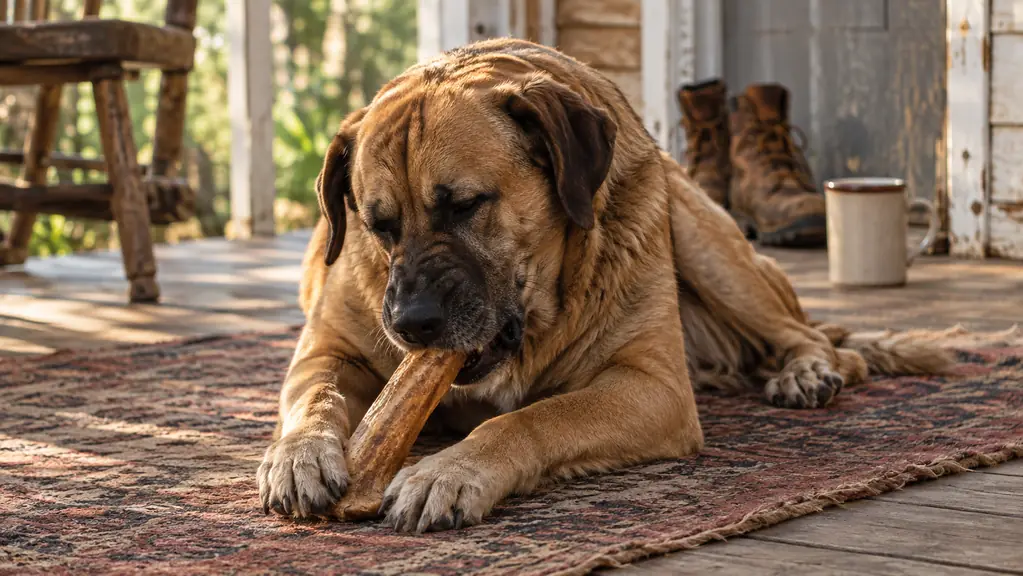
Tucker is seven years old, sixty-eight pounds, and built like a wheelbarrow with opinions. He is also a heavy chewer, which is a polite way of saying he has destroyed a list of things I would rather not recite in front of company. About ten months ago I bought a three pack of Himalayan Dog Chew yak cheese chews, mostly because I was tired of paying for bully sticks that disappeared before I finished my coffee. I expected the same story in a fancier bag. What happened instead is that this became the chew I actually keep in the pantry, the one that rides in the truck when we head to the state park a few weekends a year.
This is not a review written off a product page. It is ten months of Tuesday afternoons, of peeling a wet nub off the living room rug, of watching what a dog with a sensitive stomach does the morning after a new chew. I will tell you what held up, what annoyed me, and who I would hand one to without a second thought. The short version: it is the best chew in my house for a big dog that finishes everything else too fast, and it is not the right chew for every dog.
The Quick Verdict
Ten months in, one chew still buys Tucker four or five days of twenty to thirty minute sessions, and the last nub puffs in the microwave instead of getting swallowed. Not the least expensive chew in the jar, but nothing else in my pantry has held up this well.
Amazon Check Today's Price →The chew that earned its spot in the pantry ten months ago
Three large and extra large chews, 3.3 ounces each, made with yak and cow milk and no preservatives or binding agents. If your dog is in the sixty-five pound and up range and finishes everything else in an afternoon, start here.
Amazon Check Today's Price on Amazon →How I've Used It
The bag showed up with three chews in it, and the first thing I noticed was the weight. Nine point nine ounces total, roughly 3.3 ounces per chew, each one about five inches long and an inch across. That is a serious piece of cheese, not a training treat with a picture of a mountain on the front. I put the bag in the pantry next to the dog food bin and I hand Tucker one at a time, usually on the rug in the living room, or out on the back porch when the weather is decent and I do not want crumbs tracked through the house.
The first one I gave him, I did it clumsily. I handed it over on the rug with no towel under it, and twenty minutes later there was a damp oval the size of a dinner plate worked into the pile. Now the towel goes down first, an old bath towel folded twice, and it goes through the wash on Sunday with the rest of the dog laundry. Small thing. It saved me an argument and it saved the rug.
A session runs twenty to thirty minutes before he wanders off to check on Darlene or bark at the mail truck. I pick the chew up, put it back in the bag, and he comes back to it the next day. That has been the pattern for ten months. It is also why I mostly stopped buying the softer chews. With a bully stick he can flatten the whole thing in forty-five minutes to an hour if I let him, and then he is looking at me like I have personally wronged him.
The last inch is the part I have come to like best. When he works a chew down to a small nub, I take it away and microwave it for about forty-five seconds. It puffs up, goes soft and a little crunchy, and he gets to finish it without me worrying about him swallowing a hard chunk. The kitchen smells like toasted cheese for a few minutes afterward. Darlene has opinions about that, and none of them are positive.
One chew goes in the truck when we camp. It is quiet, it does not leave grease on a tent floor the way a bully stick does, and it buys me twenty minutes of peace at a picnic table while the coffee perks. That sounds like a small thing until you have tried to keep a Labrador entertained at a campsite at six in the morning.
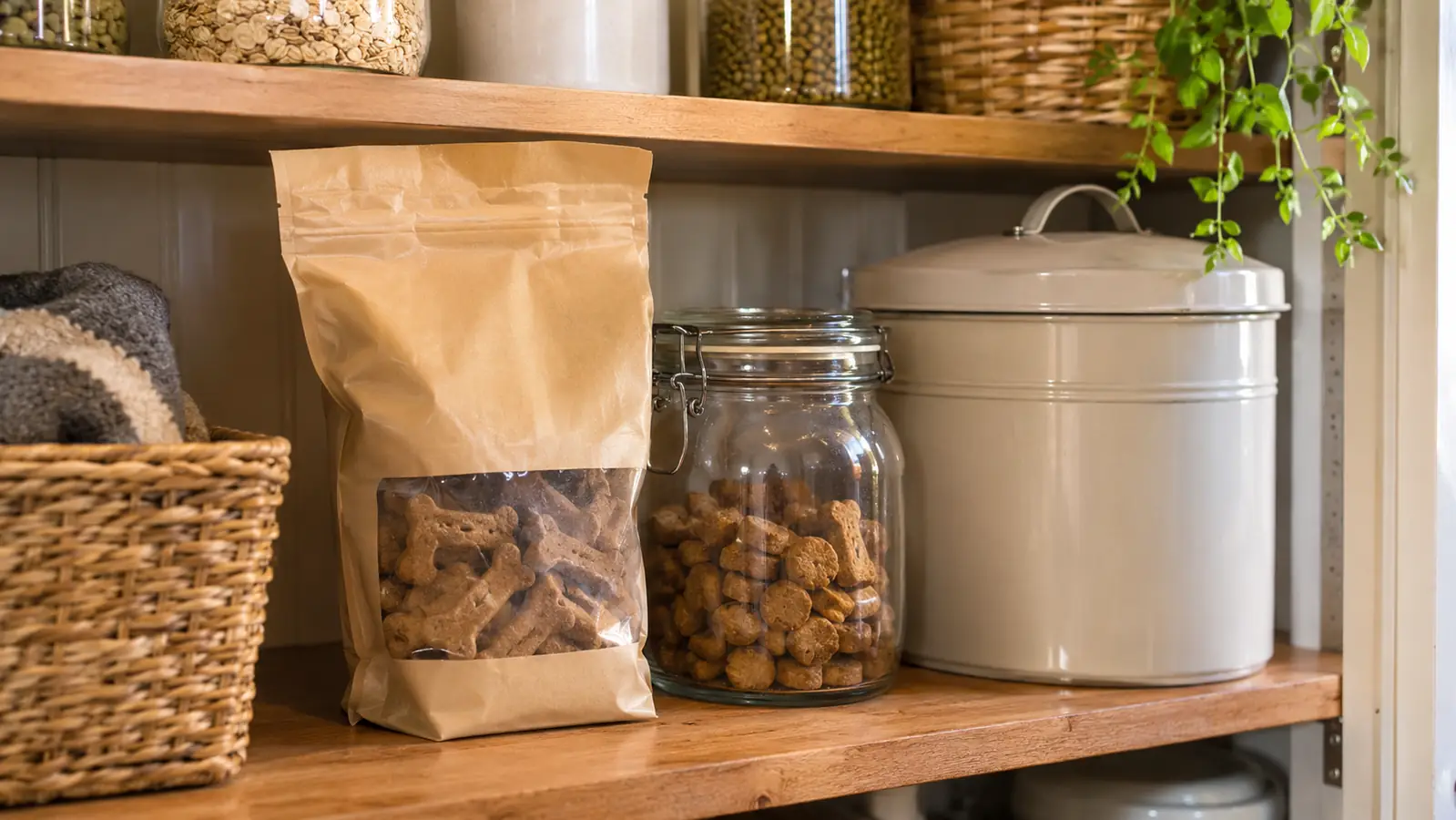
For the record, the Himalayan chews live in the pantry and the training treats live in the sealed jar on the kitchen counter, which is a system Darlene set up and I have learned not to argue with. The jar is for the soft stuff he gets on walks. The pantry bag is for the serious business of a half hour of quiet.
What's Actually in the Bag
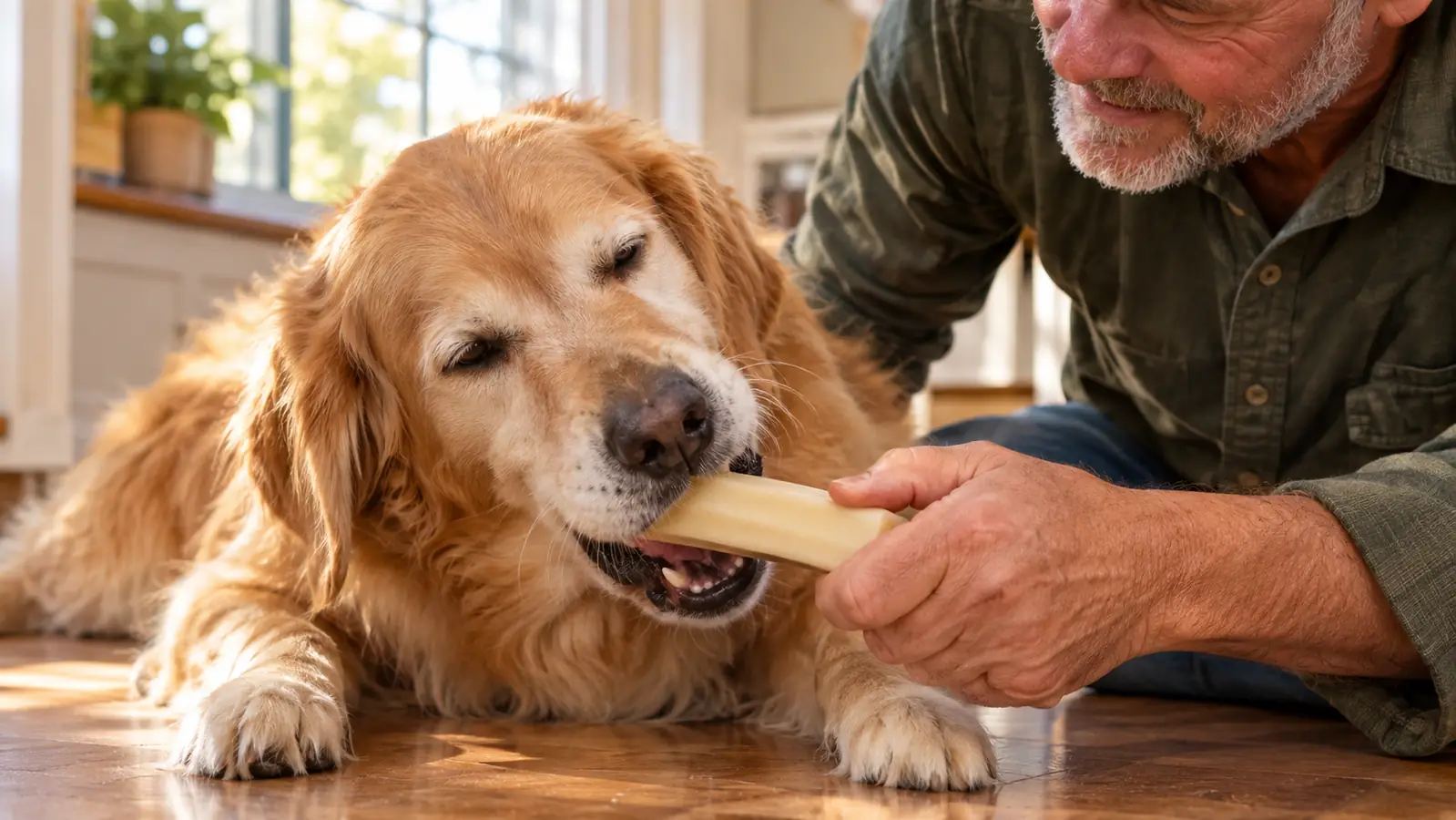
The label on the Himalayan bag is short, and that is the reason I bought it in the first place. Yak and cow milk, and not much else. The company describes an ancient recipe from the mountains of Nepal, made with no binding agents, preservatives or additives. The listing also calls it grain free, gluten free, wheat free and lactose free. For a dog like Tucker, whose stomach registers a complaint about one new treat in three, a short ingredient list matters more than whatever is printed on the front of the bag.
The size is worth understanding before you order. This is the large and extra large three pack, and each chew is 3.3 ounces, with the whole bag at 9.9 ounces. The listing recommends it for dogs sixty-five pounds and up, and it lists the breed recommendation as large breeds. Tucker sits at sixty-eight, which puts him at the bottom of that range, and the size is right for him. If you have a twenty pound terrier, this is not the bag you want. Handing a small dog a chew that size is how folks end up at the emergency clinic on a Sunday afternoon.
The bag itself is resealable, which matters more than it sounds. The listing gives the packed dimensions as five by one by four inches and just under ten ounces, so it stores flat on a pantry shelf instead of taking up a corner. I press the air out and roll the top down before I close it. Ten months of doing that and the chews still come out hard, not tacky.
One thing I did not expect: it does not come apart in strips the way rawhide does. It wears down. I have watched Tucker work the same chew for four days and there is never a pile of torn off pieces on the rug. That is not a guarantee and it is not a reason to skip supervision. But it is the reason I am comfortable being in the next room instead of sitting on the floor staring at him, and I would not say that about every chew in the basket.
How Long One Really Lasts
One chew lasts Tucker about four or five days of short sessions. Not one sitting. I want to be clear about that, because a bag of three is not a year of entertainment, and I have bought several bags over the past ten months. The number that matters is the per chew math: twenty to thirty minutes a day for the better part of a week, against a bully stick that is gone before my coffee goes cold. That is the trade I am making, and it works for me.
I keep a running note on the calendar by the back door, mostly because I wanted to know whether the cost per session actually beat the alternatives. Four days, five days, once six when the weather kept us inside and he was working at it in short bursts. The note is not scientific. It is a pencil mark next to a date, and it has been consistent enough that I stopped bothering to write it down.
How fast yours goes depends on the dog. A determined chewer with strong jaws will make quicker progress, and I have noticed the chew softens as it goes, so the last third disappears faster than the first. An older dog or a dog that nibbles will take longer, which is fine, because the point is the chewing and not the finishing. Tucker is somewhere in the middle, and I have never had one last less than three days.
It also holds one slot in the rotation rather than owning the whole rotation. The antler comes out when I am working in the garage, the bully sticks are for a Saturday on the back porch, and the Greenies are the after supper habit that keeps the vet off my back about tartar on the back teeth. The Himalayan chew is the one I hand him when I want a solid half hour of quiet, or when we are somewhere that a softer chew would make a mess.
The Sensitive Stomach Question
Tucker's stomach is the reason I read labels at all. He has thrown up after treats that other dogs eat by the handful, and I have learned to introduce anything new in a small dose and watch him the next day. With this chew there was no upset. No loose stool, no three in the morning wake up, no guilt in the kitchen. That is one dog and one stomach, and I am not going to tell you it will be the same at your house.
It is dairy, and that is the honest caveat. The listing says lactose free, which is part of why it worked for us, but a dog that reacts badly to milk products is still a dog I would watch carefully or skip entirely. If your dog has a history of pancreatitis or is on a prescription diet, that is a conversation for your vet, not a decision to make from a review. I asked at a regular checkup and got a shrug and a maybe, which is about what I expected.
What I can tell you is how I introduced it. One session on a full stomach, about twenty minutes, then the chew went back in the pantry. I watched him that evening and the next morning. When nothing happened, he got it again the following day. Boring, unglamorous, and the only method I trust with a dog whose gut has opinions.
What I Don't Love
It is a hard chew, and hard means supervision. I do not leave Tucker alone with one, and I would not give one to a dog that gulps its food without chewing. I also would not hand one to a dog with a history of cracked teeth or a mouth that is already sore. Tucker is seven and his teeth are in decent shape, and even so I check the chew over each time I pick it up off the rug, running a thumb along the edge he has been working on.
It makes a mess. Not a terrible mess, but a damp spot where he has been working on the rug, and a fine grit that I have learned to put a towel down for. It also has a smell, a sharp cheese smell, that lingers on your hands for a while. If you are the kind of person who does not want the living room to smell like a cheese counter, know that going in.
The grit is the part that surprised me. It works into the weave of the rug and it does not come up on the first pass. There is a spot near the fireplace that gets a second run with the vacuum on Saturday mornings now, and I have made my peace with it. A dog that chews hard for half an hour is going to leave something behind, and I would rather vacuum than pick up torn off pieces.
And it is not the inexpensive option. Per chew it costs more than a bag of mass market treats, and there have been stretches when my usual order was out of stock and I had to wait. I keep a bag in the pantry anyway, because the cost per minute of actual chewing beats anything else I have tried.
What I Liked
- Short ingredient list: yak and cow milk with no preservatives or binding agents
- One chew lasts four or five days of sessions for a sixty-eight pound dog
- The last nub puffs in the microwave, so nothing hard gets swallowed
- No stomach upset for a dog that reacts to plenty of other treats
- Travels well, quiet and clean enough for a campsite
- Resealable bag stores flat on a pantry shelf
Where It Falls Short
- Hard chew, so it needs supervision and is not for dogs that gulp
- Leaves a damp spot, a fine grit and a cheese smell on the rug and on your hands
- Costs more per chew than a bag of mass market treats
- Not for small dogs, the listing is for sixty-five pounds and up
Twenty minutes a day for four or five days, against a bully stick that is gone before my coffee goes cold. That is the whole argument.
Who This Is For
If you have a dog in the sixty-five pound and up range who destroys softer chews in minutes, this is the one I would hand you. It suits a heavy chewer with a sensitive stomach, an owner who reads the back of the bag, and anyone who wants a chew that travels without leaving grease on everything it touches. It also suits people who are willing to supervise and to take the last nub away and puff it in the microwave. Ten months in, the bag lives in my pantry and I do not see that changing.
Who Should Skip It
Skip it if your dog is small, if your dog gulps instead of gnaws, or if your dog's teeth are already worn or cracked. Skip it if you want a chew you can toss on the floor and walk away from, because this is not that. Skip it if dairy has caused problems before, and skip it if the smell of cheese on your hands for the rest of the evening will bother you more than the quiet half hour is worth. None of that makes it a bad chew. It makes it the wrong chew for some houses.
If you have a big chewer, this is the bag to try next
Three large and extra large chews, 3.3 ounces each, with no preservatives or binding agents. Ten months in my pantry and still the first thing I reach for when I need a quiet half hour.
Amazon Check Today's Price on Amazon →