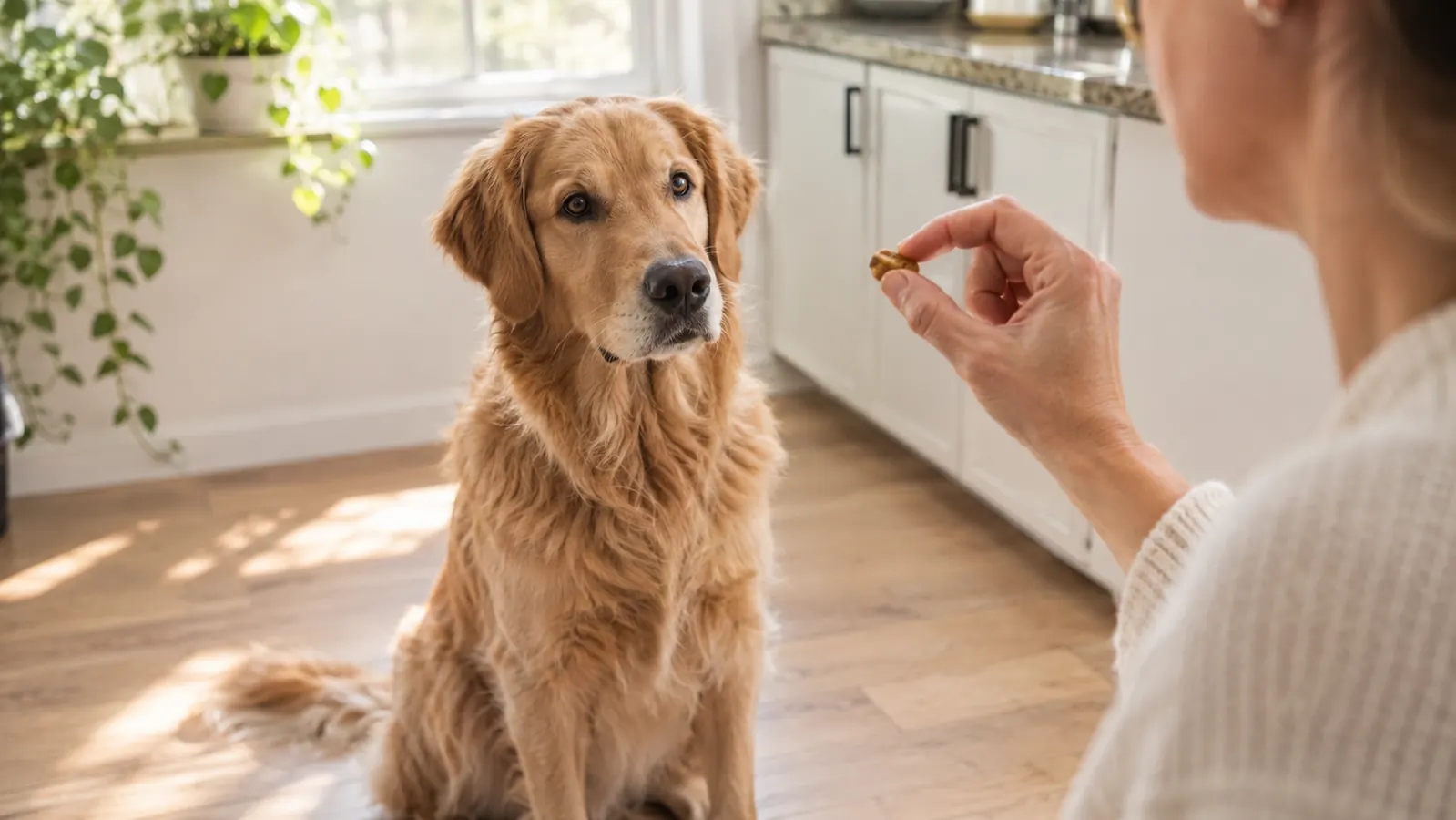
I have a seven year old yellow Lab mix named Tucker who will do almost anything for a piece of food. That sounds like a gift. In practice it means he is also willing to do almost anything for the wrong food, which is how I ended up at the kitchen counter holding a biscuit the size of my thumb while a dog who had stopped listening somewhere around the third crunch stared at me. By the time he finished chewing, he had forgotten the command and I had forgotten why I was standing in the yard in my slippers.
Training a Labrador with hard treats is like having a conversation with someone chewing ice. The reward outlasts the lesson. Soft treats fix that, though not any soft treat, and not in any size. About six months ago I switched to Wellness Rewarding Life Soft Training Treats in the beef and turkey recipe, and they now live in a pouch on my belt instead of the jar on the counter. What follows is the sequence I actually used, step by step, including the parts I got wrong the first time.
The Reward Has to Land Before the Lesson Ends
Wellness Rewarding Life Soft Training Treats are small, soft, and easy to break in half, so the treat reaches your dog while he is still doing the thing you wanted. Grain free, beef and turkey, six ounces to a bag.
Amazon Check Today's Price on Amazon →Why Soft Works Better on a Labrador
Labs are mouthy, food motivated, and built like small tanks. Those three traits combine badly with hard biscuits during training. A hard treat has to be crunched, and crunching takes time, and time is the enemy of a clean repetition. Ten repetitions with a soft treat take about the same amount of time as three repetitions with a biscuit, and three repetitions do not teach a dog much beyond the fact that something good happened recently.
There is also a safety angle that does not get talked about enough. Tucker is 68 pounds and he does not chew carefully when he is excited. A hard treat that gets swallowed half crunched is a risk I would rather not take in the middle of a session where he is moving and worked up. A soft treat goes down without a fight, and we move on to the next repetition.
The last reason is the boring one, which is consistency. A treat your dog will work for on a rainy Tuesday in a hallway is worth more than a treat he only wants when he is bored out of his mind. Tucker will work for a soft piece of beef and turkey after he has already had breakfast and a nap on the rug. That is the whole test, and most bags in my pantry have failed it.
Step 1: Size the Reward to the Job, Not the Bag
A training treat is not a snack. It is punctuation. It should land, get swallowed, and get out of the way so the next repetition can start. A Lab can take a piece of soft treat the size of a pea without slowing down, which means you can run ten repetitions in the time one biscuit would take. That ratio is the entire reason I switched, and it matters more than anything printed on the label.
I break each piece in half, and sometimes into quarters, depending on what we are doing. A sit in the kitchen is a quarter. A recall in the backyard with a squirrel involved is a full piece. The bag is six ounces and the pieces are small, so one bag lasts me about three weeks of regular work, longer in the winter when we are only running indoor drills.
The ingredient list is where Tucker's stomach gets a vote. He has a sensitive stomach, so I read the back of every bag and I only run one new brand at a time so I can tell what caused a bad night. Wellness Rewarding Life is grain free, made with beef and turkey, and leaves out poultry by products, wheat, wheat gluten, corn, soy and artificial colors. It is made in the USA. Salmon oil brings DHA and flaxseed brings omega 3s. I do not buy a training treat for the omega 3s, but I am not sorry they are in there.
Step 2: Teach a Marker Word Before You Teach Anything Else
The treat only works if the dog knows exactly which behavior is being paid for. A Lab who gets a treat three seconds after he sits has been paid for whatever he was doing during those three seconds, which might have been standing up, looking at a fly, or licking his own shoulder. Timing is most of the job.
Pick one word and use it every single time. I use yes. Not good boy, not okay, not a clicker, just yes. Say it the instant his rear touches the floor, then deliver the treat. Do that twenty times in the kitchen with no other goal in mind. The word starts to mean a treat is on the way, and once that happens you can mark a behavior from across the yard and let the treat arrive a second later and it still counts.
This takes about two days of short sessions. Short means five minutes, three times a day. A Lab will work for an hour if you let him, and he will be worse at the end than he was at the start, because a tired Lab is a Lab who starts guessing. I set a timer. When it goes off we stop, even if he is doing well and even if I want to keep going.
Step 3: Start Recall in a Hallway, Not the Backyard
Recall is the behavior that matters most and the one people practice least, because practicing recall in an open yard with a dog who does not come is nobody's idea of a good time. So do not start there. Start in a hallway with two closed doors and almost nothing to smell.
Stand five feet away. Say his name once, then the word come, then show the treat. Do not chase him. Do not repeat come five times in a row, because that teaches him that come means come on the fourth request. If he does not come, walk him back to the starting spot calmly and try again from closer.
Pay every single time at this stage. This is where people get stingy, and I include myself in that. They pay for the first three comes and then decide the dog should work for free because he clearly knows it. He does not know it. He knows it pays. A recall that pays nine times out of ten gets slower every week, and I have watched that happen with my own dog.
A recall that pays nine times out of ten gets slower every week. Pay ten out of ten and it gets faster.
Step 4: Take the Pouch Outside and Proof It on Leash
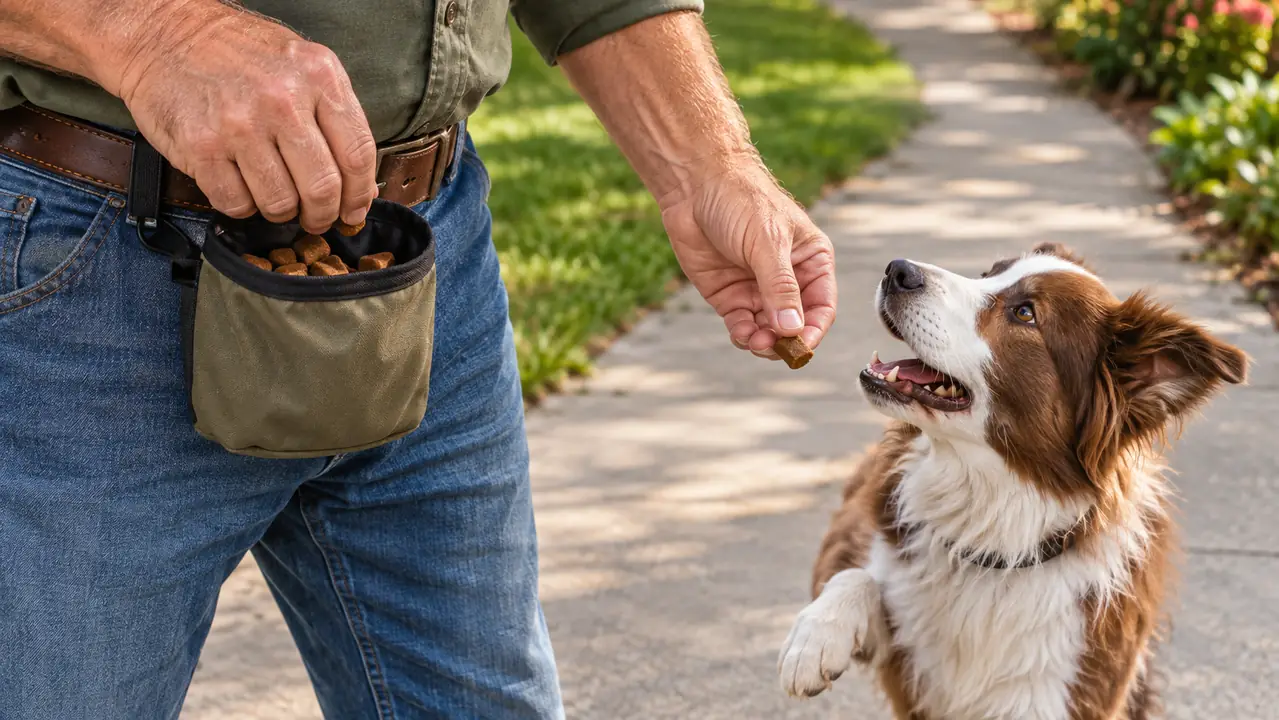
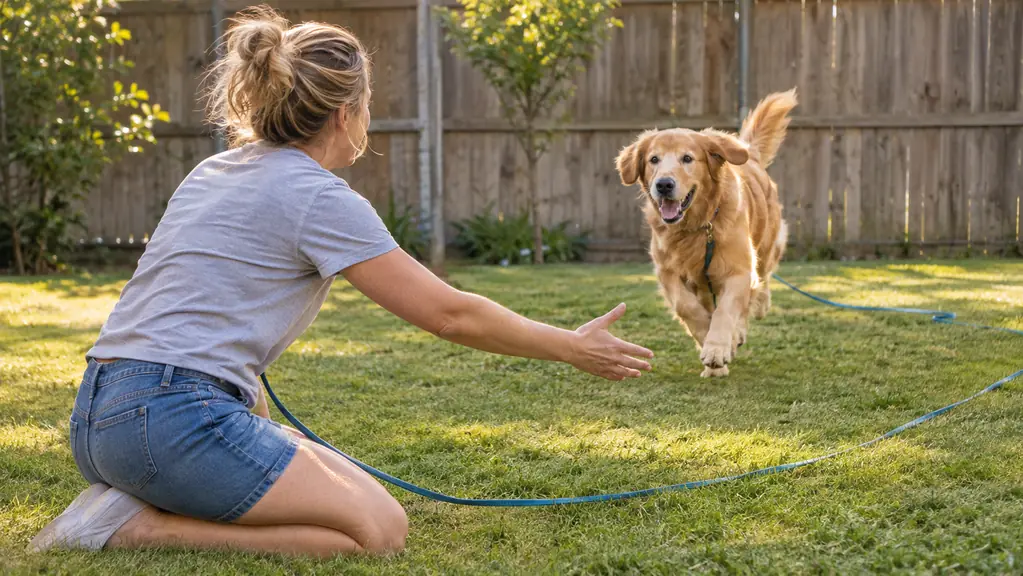
Once he comes in the hallway, move to the backyard, then the front yard on a long line, then the sidewalk. This is where the pouch earns its place. A bag stuffed in your pocket means fumbling, and fumbling means the reward arrives late and you look like a man wrestling a wrapper instead of a man training a dog.
I keep the pouch on my belt on the right side and refill it from the bag in the pantry before every walk. Ten or twelve pieces is enough for a twenty minute walk. Loose leash work is where soft treats pull ahead of everything else. The dog is moving, and you need to get the reward into his mouth while he is beside you, not after he has stopped and sat down to eat it.
The rule I use is that the treat goes where I want his head to be. If he is pulling, I stop and wait. The second he looks back at me, the treat goes in front of his nose at my knee. Tucker figured that out in about four walks. He is not a genius. He is a Lab, and Labs keep score.
Step 5: Halve the Piece and End the Session Early
The last step is the one that makes a bag last and keeps the dog sharp. Once a behavior is reliable, cut the reward to half a piece and pay it on a schedule he cannot predict. Sometimes after one repetition, sometimes after three. He keeps working because the next one might be the one that pays.
End the session while it is still going well. The temptation is to squeeze one more repetition out of a good five minutes. That is how you get a dog who quits on you two weeks later, and it is a hard habit to break once you have it.
Six months in, a walk around the block is mostly a walk, with the pouch on my belt for the two or three times he tests the end of the leash. The bag still sits in the pantry and the pouch still gets refilled before we leave. That is the whole system. It takes less effort than the biscuit routine ever did.
What Else Helps
Keep the training treats separate from the everyday treats. The jar on the counter is for being a good dog. The pouch is for working. Tucker knows the difference, and he is noticeably sharper when the pouch comes out because it only ever appears when we are doing something together.
Get the timing right before you worry about the food. A soft treat buys you a fraction of a second. If you are late with the marker word, no treat on the market fixes it. Practice saying yes the moment the behavior happens, even with no dog in the room. It sounds silly. It works.
For a hard behavior, like recall off a squirrel at the campground, I raise the value. A piece of the yak cheese or a few minutes on a bully stick after the session works as a jackpot. Soft treats during the work, chews for the downtime. Mixing the two up is how you end up with a dog who expects a forty five minute chew for sitting.
One more thing about the bag itself. Because Tucker has a sensitive stomach, I run one brand at a time and give it two weeks before I decide anything. Wellness Rewarding Life has held up through a summer of leash work and a chilly fall of indoor drills without a single bad night, which is more than I can say for two bags I tried before it. None of that makes a dog sit. It just means I am not spending a training session wondering what happens at two in the morning.
Small Pieces, Paid Fast, Every Single Time
These are what ride in the pouch on walks and at the campground. Soft enough to swallow, small enough to break in half, and grain free for a dog with a picky stomach.
Amazon Check Today's Price on Amazon →