
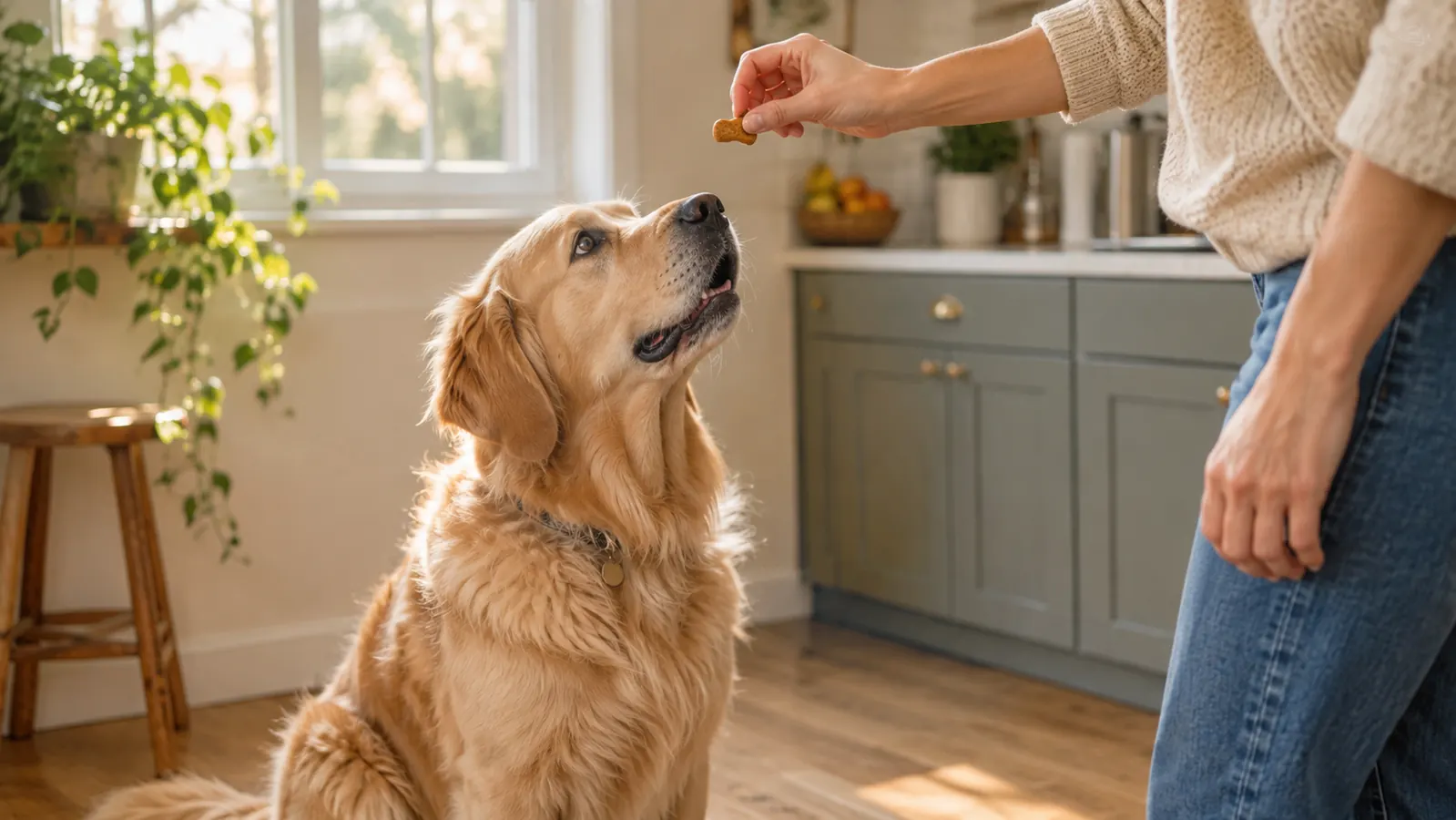
I bought my first bag of Wellness Rewarding Life soft training treats about six months ago for a reason that had nothing to do with nutrition. Tucker, my yellow Lab mix, had decided that the word come was a suggestion rather than a command, particularly at the state park where the smells are better than anything in our backyard. The crunchy biscuits I had been using took him a good five seconds to get through, and five seconds is long enough for a dog to forget what he was being paid for. I wanted something he could take in one motion and get straight back to the business of paying attention.
So I stood in the aisle and read the backs of four bags, put three of them back on the shelf, and walked out with this one. Six months and a great many repetitions later, I have opinions, and they are not all flattering. What follows is the review I would have wanted to read before I spent money: what the label actually promises, what these treats do well, where they quietly fall short, and which dog owners should walk past this bag and buy something else entirely.
The Quick Verdict
A soft, grain free training treat with a genuinely readable ingredient list and a texture that pinches apart in your fingers. The bag is small enough that anyone training seriously will work through it in a few weeks.
Amazon Check Today's Price →The reward that finally made come worth coming back for
Soft enough to eat in one motion, easy to split into two when a session needs twenty repetitions, and made without the wheat, corn, soy and artificial colors I was trying to avoid. This is the bag that lives in my treat pouch.
Amazon Check Today's Price on Amazon →How I've Actually Used Them
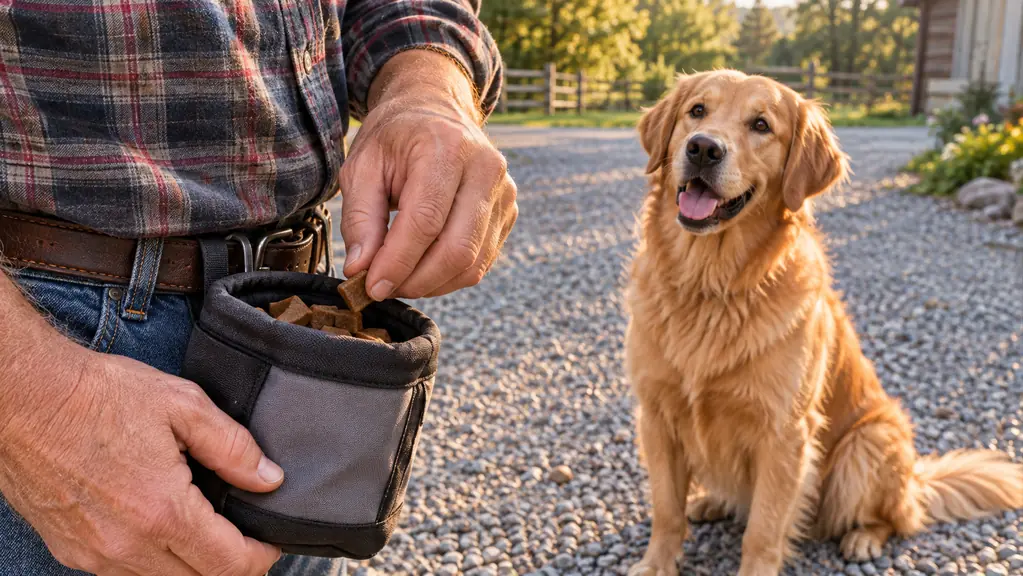
These are not a chew, and I want to be clear about that up front because the word treat covers a lot of ground. A chew is something Tucker works on for forty-five minutes on the back porch. This is something he eats in a second and then looks at me for another one. I keep a handful in a treat pouch on my belt when we do leash work in the driveway, and I top it up from the bag in the pantry before we head out. That pouch is the whole reason these work for us. When a reward takes two seconds to deliver, you can actually pay the dog for the behavior you want instead of the behavior that happens while you are fumbling with a wrapper.
On walks they do the job I bought them for. When Tucker checks in with me instead of pulling toward a passing bicycle, he gets a piece. When he holds a sit at the curb while a jogger goes by, he gets a piece. Twenty repetitions in a row is nothing, and because they pinch apart between my thumb and finger I can stretch a single treat into two rewards when I am working on something that needs a lot of repetition. That sounds like a small thing. It is not a small thing when you are standing at the end of a driveway in February with a dog who has decided he would rather be inside.
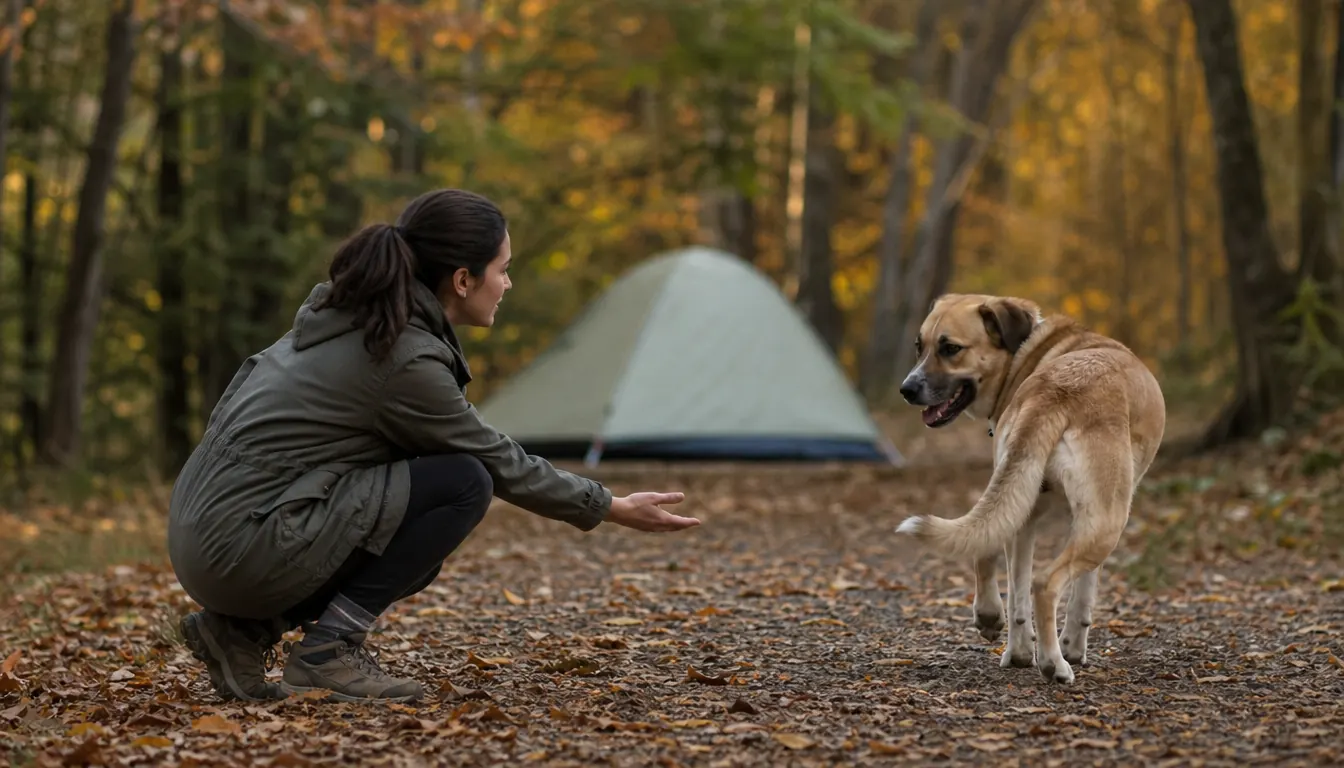
At the campground they earn their keep in a different way. Recall at a state park is a harder sell than recall in my own backyard, and a reward has to compete with the smell of somebody else's campfire and the possibility of a dropped hot dog. These treats compete. Six months of using them for that specific job, and Tucker's check-ins on the trail have gotten noticeably quicker. I would like to take credit for my training, but the honest answer is that the reward got better.
There was a specific afternoon last fall that settled it for me. We were two sites in at the campground, a family down the loop had a fire going and a dog out on a long line, and Tucker was interested in both. Every time he turned his head back toward me I paid him. Every time he held a down-stay while the other dog walked past, I paid him again. We went through most of a pouch in twenty minutes, and by the end of it he was offering me the behavior before I asked for it. That is not a thing the bag does. But the bag made it possible to pay him enough times in a row for the lesson to stick.
What the Label Says, and What It Doesn't
The label is the reason this bag came home with me. Beef and turkey are the flavors, the recipe is grain free, and the two things Wellness bothers to guarantee are DHA from salmon oil and omega-3 fatty acids from flaxseed, which the bag ties to brain development and a healthy coat. I have stood in a lot of pet store aisles and I can count on one hand the number of training treats that say anything about either. The bag also states plainly that there are no poultry by-products, no wheat, no wheat gluten, no corn, no soy and no artificial colors. For a dog like Tucker, whose stomach has opinions, that short list of things that are not in the bag matters more than anything printed on the front.
I put three other bags back on the shelf that day, and the reasons are worth spelling out because they are the same reasons I would give you. One listed poultry by-products near the front of the ingredient line. One had artificial colors, which do nothing for the dog and exist entirely for the person holding the bag. One was vague enough about what was actually in it that I could not tell you what I would be feeding. Wellness was the only one of the four that named what it left out, and a company that tells you what is not in the bag is usually a company that checked.
What the label does not do is tell you whether your particular dog will tolerate it, and no bag can. I gave Tucker two pieces the first day and watched him the way I watch anything new. Nothing happened. No loose stool, no three in the morning trip to the back door, no change in appetite. Six months later the routine is the same and the result is the same, which for a dog with a sensitive stomach is the most useful data point I can give you.
One honest note on grain free. It is not automatically better for every dog. It became popular for reasons that had as much to do with marketing as with nutrition, and if your dog does fine on a food or a treat that contains grain, there is no prize for switching. I buy these because they are soft, because the ingredient list is short and readable, and because Tucker does well on them. The grain free part is a bonus, not the reason.
Two pieces a day for six months, a dog with a sensitive stomach, and not one bad night. That is the most useful thing I can tell you about this bag.
The other thing I will say for Wellness is that the treats are consistent from bag to bag. I have bought this product five or six times now and the texture has not changed. That sounds like faint praise. It is not. I have bought other soft treats that arrived pliable once and then showed up dry enough to crack the next time, and a training treat that cracks in half in your pocket is a training treat that has stopped being useful.
The Things Nobody Mentions in the Reviews
The softness cuts both ways. Soft treats go firm faster once the bag is open, and this bag is no exception. I fold the top over and clip it shut, and it lives in the pantry, and even so, by the last third of the bag they are stiffer than they were on day one. Not unusable, and Tucker has never turned one down, but if you are buying a bag and leaving it open on a shelf for two months, expect a different texture at the end than you had at the beginning.
The bag is six ounces, and that is smaller than it sounds. Somebody doing serious weekly training will go through one in a matter of weeks, which is worth knowing before you decide how many to order. I go through a bag roughly every four to six weeks with the amount of leash work we do, and I am not a professional trainer. If you have a puppy and you are running three sessions a day, do the arithmetic and buy accordingly.
They crumble. Soft treats leave crumbs in the pouch, in a jacket pocket, and on the floor of the truck. I have gotten used to it and I knock the pouch out over the backyard every few days. If you are the kind of person who keeps treats in a coat pocket for a walk, know that you will be picking residue out of that pocket. It is the price of a texture a dog can eat quickly.
And they are not a meal, no matter how good the ingredient list makes you feel. I still feed Tucker his regular food on his regular schedule and these are on top of it. A dog can put on weight on training treats if you are loose with them, the same as with anything else. I count them roughly. I do not count them precisely. If your dog is on a weight management plan, that is a conversation for your vet, not a decision to make in an aisle.
If you are comparing these to a hard biscuit, the honest trade is this. A biscuit lasts longer in the bag and takes longer to eat, and a soft treat gets eaten faster and pays the dog faster. I keep both in the house. The biscuit comes out when I am not in a hurry and the session is casual. The soft treat comes out when I am asking for something difficult and I need the dog to know it was worth doing.
What Else Is in the Rotation
Because I want to be fair about where these fit: Tucker still gets his chews. There is an elk antler in the toy basket by the back door that has been slowly worn down over about eight months, a yak cheese chew in the pantry that goes camping with us and gets microwaved down to a puff when it gets small enough, and a bully stick two or three times a week on the back porch while I am out there with him. Those are occupancy. These are payment. A bag of soft training treats does not replace any of that, and I would not want it to.
The closest thing in the cabinet for comparison is the dental treat he gets after supper, and they are not remotely the same product for the same job. That one is a daily habit aimed at his teeth, and my vet is clear that it is a supplement to cleanings and brushing rather than a replacement. These are a reward delivered in the middle of a training session. I mention the difference because people lump all treats together and then wonder why a bag disappears so fast when they are using the wrong one for the job.
Storage is boring but it matters. The bag lives in the pantry, the pouch gets emptied and rinsed every couple of weeks, and the jar on the counter is for the dental treats, not for these. Soft treats and a counter jar are a bad combination in a house with any humidity in it, and middle Tennessee has humidity.
What I Liked
- Short, readable ingredient list with no poultry by-products, wheat, corn, soy or artificial colors
- Guaranteed DHA from salmon oil and omega-3 from flaxseed, which almost no training treat bothers with
- Soft enough to pinch apart, so one piece can become two rewards in a repetition-heavy session
- Tucker has a sensitive stomach and has had no trouble across six months of daily use
- Consistent texture from bag to bag, which is rarer than it should be
Where It Falls Short
- Soft treats firm up once the bag has been open a while
- Six ounces goes fast for anyone training seriously
- They crumble in a pouch or a coat pocket
- Grain free is not automatically better for every dog
- Not a chew, and using it like one wastes it
Who This Is For
If you are training something specific and you need a reward that lands fast, this is the bag. Recall work, leash manners, settling on a mat, any behavior where you need twenty repetitions in ten minutes and the reward cannot turn into a production. It also suits dogs with sensitive stomachs, because the ingredient list is short and the things most likely to cause trouble are not in it. And it suits anyone who reads the back of the bag before buying, because there is not much on this one to argue with.
Who Should Skip It
Skip it if what you actually want is a long-lasting chew, because this is not one and no amount of hoping will make it one. Skip it if you train casually, once a week, and a bag would sit in the pantry going firm before you got halfway through it. Skip it if your dog has a documented problem with any of the ingredients, which sounds obvious until you watch people buy a bag because a review called it clean. And skip it if you want one product to do everything, because the treats that are good at training are rarely the ones that are good at occupying a dog for an hour.
What I'd Tell You Before You Buy
Buy one bag before you buy three. Watch how your dog handles it for a few days, and watch how fast you go through it, because the second thing will tell you more about whether it is worth rebuying than anything printed on the shelf. Keep it closed between sessions. Do not expect it to replace a chew, and do not expect the grain free label to mean something your dog can feel. What you are buying is a soft, clean, fast reward that makes repetition easy, and if that is what your training has been missing, this is the one I keep in the pouch.
Six months in the treat pouch, and I have not shopped around since
Grain free, made without wheat, corn, soy or artificial colors, and soft enough to split in two when the session calls for it. If your training has stalled on a reward that takes too long to eat, start with one bag and see.
Amazon Check Today's Price on Amazon →