Ten months ago I put a three pack of Himalayan Dog Chew yak chews in my cart for a dull reason: I was tired of watching Tucker finish a bully stick before I finished my coffee. I expected a harder version of the same experience. What I got was slower, quieter, and more of a routine than a treat, and it took me two chews to learn how to hand one over properly. That learning curve is the part nobody puts in the product photos.
This is not going to be a review that repeats the back of the bag. I am going to tell you what the label actually says, what ten months in a rotation did to the chews and to my kitchen rug, and the handling mistake I made in the first week that wasted most of a stick. If your dog is a 68 pound heavy chewer with a sensitive stomach, those details matter more than a star average.
The Quick Verdict
A short ingredient list and a chew that lasts days instead of minutes. Buy the size that matches your dog and take the last inch away, and it earns a permanent spot in the rotation.
Amazon Check Today's Price →The Chew That Was Still in the Pantry on Thursday
Three large and extra large sticks, 3.3 ounces each, made from yak and cow milk with no preservatives and no binding agents. If your dog is a serious chewer, this is the one that slows him down.
Amazon Check Today's Price on Amazon →What Nobody Tells You About Yak Chews
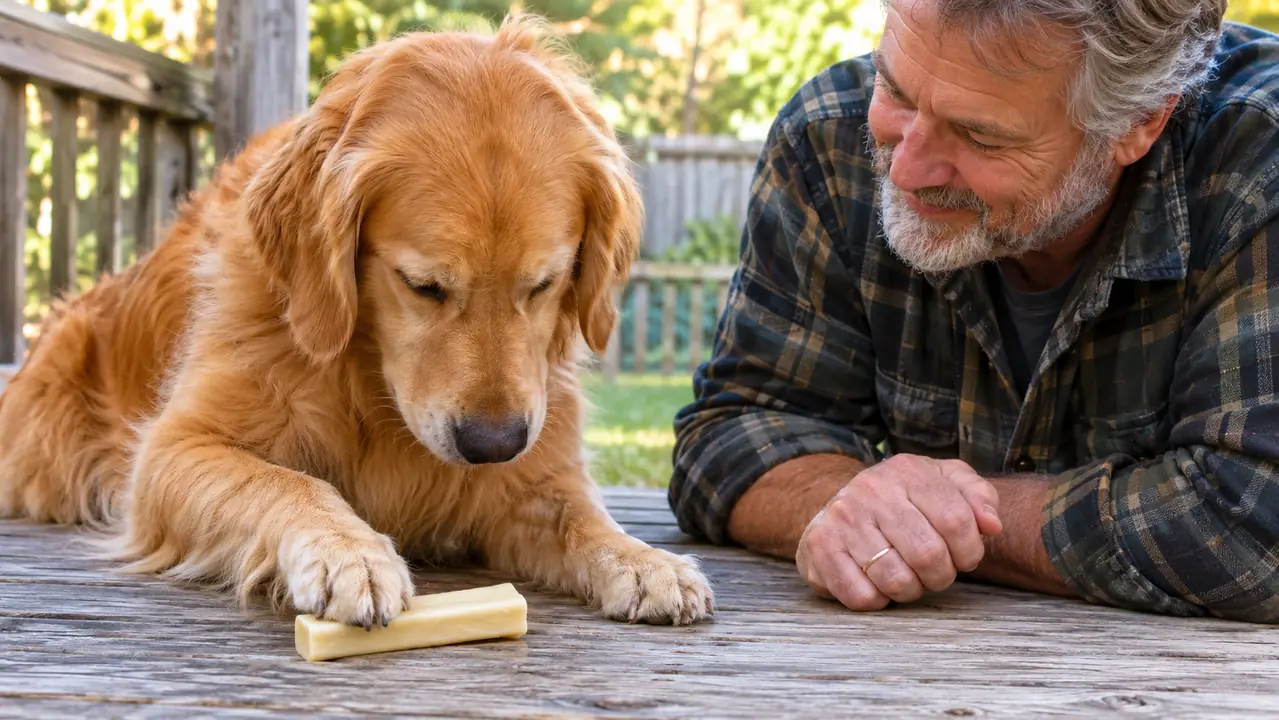
A yak chew is not a pressed rawhide and it is not a puzzle toy. It is a hard cheese, cooked and dried, made from yak and cow milk, and the Himalayan Dog Chew version carries an ingredient list you can read out loud without stopping. The bag says no preservatives, no binding agents, no additives, and it lists the chews as grain free, gluten free, wheat free and lactose free. It also says the recipe comes from the mountains of Nepal, which is the kind of line that usually makes me put a bag back on the shelf. Here the rest of the label backs it up, so I let it slide.
The sizing is where most people get into trouble. The bag holds three large and extra large chews, 3.3 ounces each, just under ten ounces total, and the package measures about five inches by one inch by four. The listing pairs that size with dogs around 65 pounds and up, and I would take that seriously. Tucker is 68 pounds and the large is a real piece of work for him. A 30 pound dog should not be handed one of these and left alone with it.
Two more things the product photos do not show. These chews do not smell like bully sticks, which in my house is a genuine improvement, because the last bag of cheap bully sticks made the living room smell like a barn for a week. They do leave a pale, tacky film where the dog chews them, and on a light rug you will see it. When the surface softens at the end of a session it gets sticky, and that is your signal to take it up and put it away before it becomes a mess or a hazard.
How I've Used It
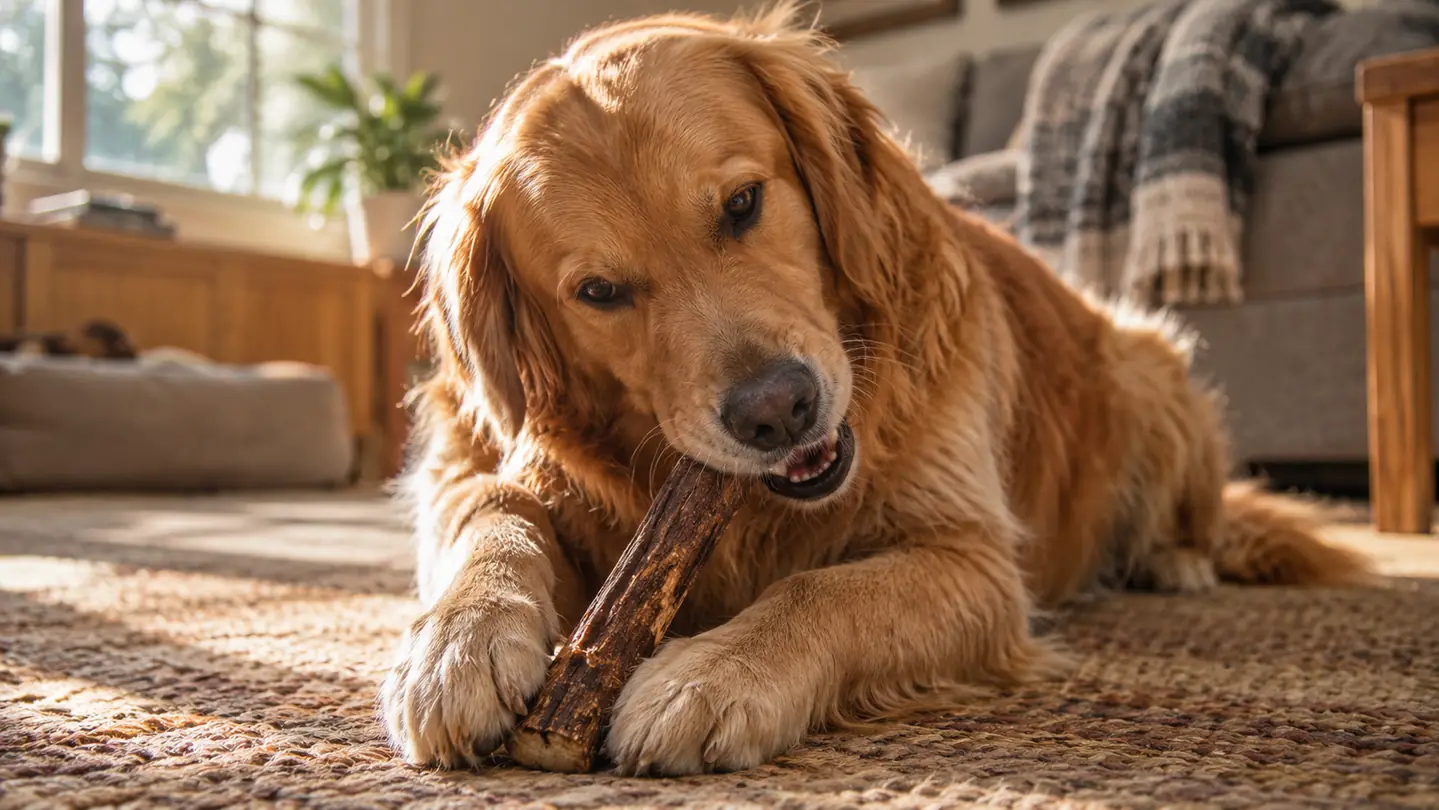
Tucker has been on these about ten months now. He gets one chew, not the whole bag, and he works on it for twenty to thirty minutes at a stretch. The first day he went at it hard and I let him keep going for close to an hour, which was a mistake. The surface went soft and gummy and he lost interest in it for a week. Since then it is twenty minutes in the morning on the back porch and sometimes another session in the evening, and a single chew lasts him four or five days that way.
Storage is unglamorous. The bag lives in the pantry, not the treat jar on the kitchen counter, because these are too big for the jar and because I want them out of reach between sessions. When we take the truck to a state park a few weekends a year, one chew comes with us. It is the easiest chew I have found to travel with, since it does not leave grease in a bag and it does not need to be kept cold.
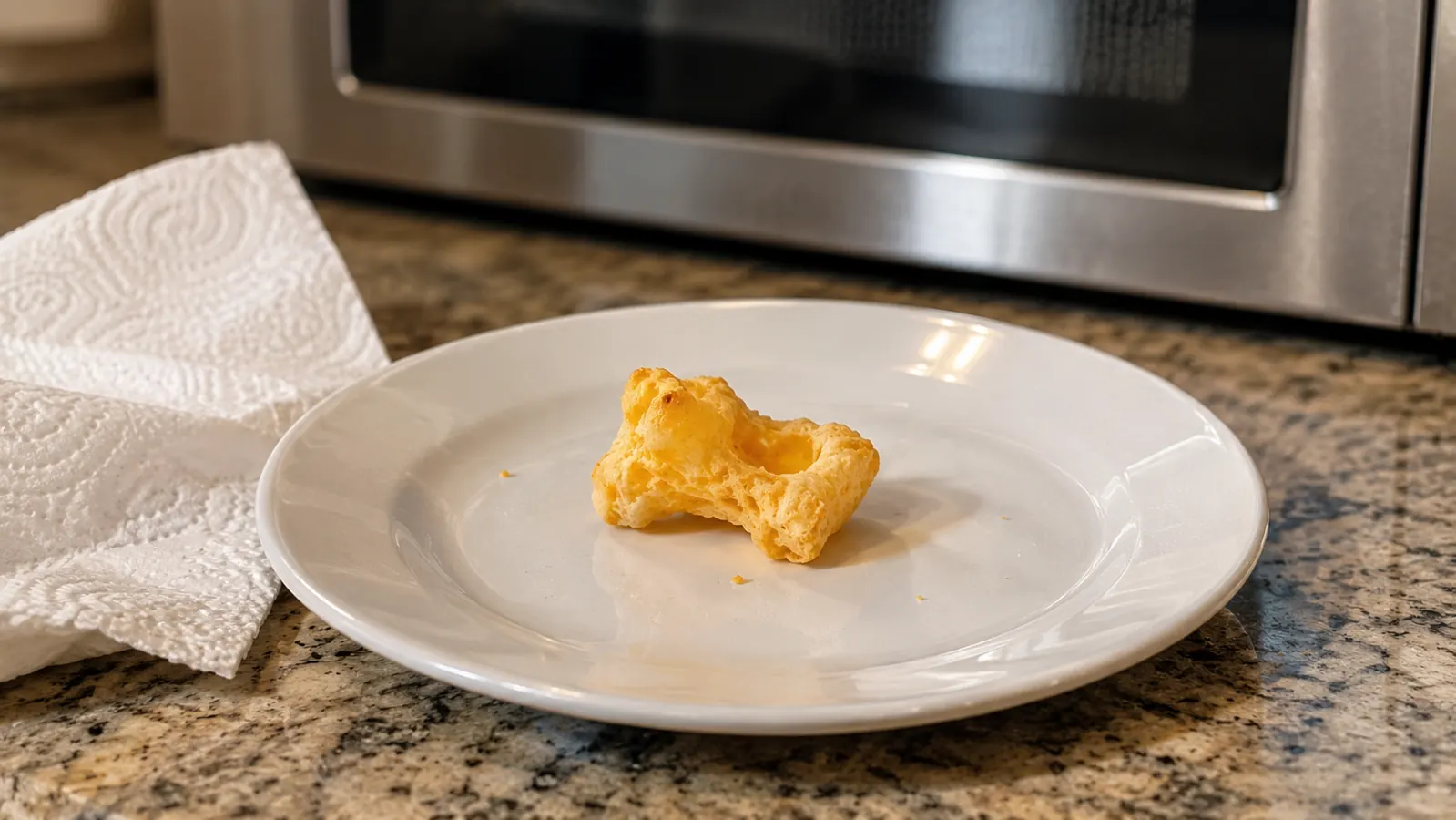
The end of a chew is its own small job. When Tucker gets down to a nub about the size of my thumb, I take it from him, put it on a plate, and microwave it for about forty five seconds. It puffs up, cracks, and softens, and after it cools I hand it back. He finishes it in one sitting. Do not walk away from the microwave while it runs, and do not hand it over hot. That step is the difference between getting your money's worth out of a chew and throwing the last third of it in the trash.
A bully stick is gone in one sitting. The yak chew was still in the pantry on Thursday, and Tucker was still glad to see it.
The Ingredient List Is Short, Which Is the Point
Most of what I feed Tucker comes with a label I have to squint at. This one does not. The bag lists yak and cow milk as the special ingredient and describes the chews as all natural, with no preservatives, no binding agents and no additives. It also carries gluten free, wheat free and lactose free on the allergen line. My dog has a sensitive stomach and has had more than one treat go through him badly, so a short list is worth real money to me, even when the chew costs more per piece than a bag of soft training treats.
I am not going to pretend that makes these a health food. They are a chew, not a meal, and a hard cheese chew is still fat and calories. Tucker gets one after breakfast and it counts as part of his daily intake, not a bonus on top of it. If your dog is at a weight you are watching, count the chew the way you count a biscuit. The point is not that it is nutritious. The point is that it is simple, and simple is what I want in something my dog spends an hour a day with his mouth on.
Durability: Slower Than a Bully Stick, Faster Than Antler
For comparison, the bully sticks I keep in the rotation last Tucker about forty five minutes to an hour, and then I take the last two inches away. An elk antler he has had for eight months is barely worn down. The Himalayan Dog Chew yak chew sits closer to the bully stick on that timeline, but it stretches across days instead of minutes, because the sessions are short and the cheese is dense enough that he has to work at it. In ten months I have had one chew go soft and get wasted, and that was my fault for leaving him with it too long on day one.
The honest limitation is the final third. A dense hard chew that has been softened at the edges is not the same object you handed over on day one, and the last two inches are where a heavy chewer does his best work and takes his biggest risk. I do not leave Tucker alone with any chew, and I do not let him get to the very end without me in the room. That is not a knock on this product specifically. It is the rule for anything this hard, whether it came from a bag or a tree.
One more durability note. Dropped on a tile floor, a chew this dense lands like a rock and skitters. In a house with hardwood, that is a small thing that happens every session. If your dog carries a chew around and drops it, you will hear it. On the back porch, which is where most of our chewing happens, it does not matter at all.
What the Star Rating Does Not Tell You
A 4.4 average across more than twelve thousand ratings tells you that most people got what they expected. It does not tell you which size they bought, how big their dog is, or whether they were in the room at the end. Reading through the low reviews, the complaints cluster in two places: dogs that lost interest, and chews that were gone faster than the owner expected. Both of those are sizing and expectation problems more than product problems, and both are fixable before you buy.
The other thing an average hides is how differently two dogs use the same chew. Tucker is a deliberate chewer. He holds a chew between his paws and works an edge. A dog that chomps and swallows is a different animal entirely, and no chew on the market is safe for that dog without a person watching. If your dog is a gulper, buy the largest size you can find and plan to take it away early, or buy something softer and skip this whole category.
What I Liked
- Ingredient list is short: yak and cow milk, with no preservatives, binding agents or additives
- Grain free, gluten free, wheat free and lactose free on the allergen line
- Lasts multiple sessions instead of one, even for a 68 pound heavy chewer
- No bully stick smell in the living room
- Travels well: no grease, no cooler, no mess in the truck
- The microwave finish gets real use out of the last nub
Where It Falls Short
- Sizing is coarse. Three large and extra large chews is a lot of chew if your dog is not a big one
- Leaves a tacky film on rugs and floors that a vacuum will not lift
- Hard enough that the last inch needs a person in the room
- Higher cost per chew than softer treats
- Some dogs lose interest once the surface softens
The Two Things That Nearly Made Me Stop Buying
The first was the mess. The tacky film a chew leaves on a rug does not come out with a quick pass of the vacuum, and I learned to put a towel down in the living room. That is a small annoyance, but it is a daily one, and if you have a light colored carpet you should know about it before you buy. The second was the size. Three large and extra large chews is the only option in this pack, and for a dog Tucker's size that is a serious commitment. There is no way to buy one and try it, and no smaller size in the same bag.
Neither of those is a reason to avoid the product. They are reasons to buy it on purpose instead of by accident. If you want a chew you can hand over and forget about, this is not that. If you want something that turns twenty minutes on the porch into a real job for a dog that needs one, this is exactly that.
How It Fits With the Rest of the Rotation
The yak chew is not the only thing in my pantry. The bully sticks last about an hour and get handed out two or three times a week. The antler comes out when I am in the garage or the yard and cannot watch a chew closely, because it wears so slowly that there is nothing to manage. The yak chew sits in the middle. It is more work for Tucker than the antler, less of a race than the bully stick, and the only one of the three that gets packed for a weekend at the campground.
That middle position is why it has stayed in the rotation for ten months. It is not the cheapest chew in the house and it is not the longest lasting one. It is the one that fits a twenty minute window on the porch when I want the dog busy and calm, and it does that job better than anything else I have bought. The antler is for when I am not watching. This is for when I am sitting right there with him.
The Camping Test
Three or four weekends a year we take the truck to a state park, and the yak chew is the chew that goes. It does not need a cooler, it does not leave grease on the seat, and it does not attract every fly within a mile the way a bully stick does. At the campsite, Tucker works on it while I set up, and the nub comes home wrapped in a paper towel to be microwaved later. If you camp with a big dog, that is a real advantage, and it is not one I expected when I bought the bag.
What I Would Change
If I could change two things about this product, they would both be packaging decisions. I would like a bag that mixes sizes so an owner can find out what their dog can handle before committing to three large chews. And I would like the microwave step printed somewhere obvious, because that step is what turns the last third of a chew into something usable, and a lot of people throw that piece away without knowing any better. Those are small complaints against a product that has done its job for ten months without a single bad morning after.
Who This Is For
This is for the owner of a big, hard chewing dog who has already been through the softer options and watched them disappear. If your dog is 60 pounds and up, chews through bully sticks in one sitting, and gets an upset stomach from the pressed and dyed stuff, this is worth the cost per chew. It also suits anyone who wants a chew that travels, because it does not grease up a bag or need refrigeration at a campsite, and anyone who wants an ingredient list they can read in one breath.
Who Should Skip It
Skip it if your dog is small. A 25 pound dog has no business with a chew this size, and there is no smaller option in this pack. Skip it if you want to hand something over and walk away, because the last third needs supervision and the microwave step needs you standing at the counter. And skip it if your dog is fussy about texture. Some dogs lose interest the moment the surface goes soft, and a chew that gets abandoned is just an expensive object sitting in the pantry until you throw it out.
Ten Months In, It Is Still the Chew I Reach For
Three large and extra large yak cheese chews, 3.3 ounces each, made from yak and cow milk with nothing added. Match the size to your dog, take the last inch away, and microwave the nub.
Amazon Check Today's Price on Amazon →